Séverin Biaou


Other projects
6 Jul 2023
Conserving Degraded Natural Habitats in the Trois-Rivières Forest Reserve, a Biodiversity Hotspot Threatened by Human Pressure in Northern Benin

Trois-Rivières Forest Reserve (TRF), one of the largest reserve forests in Benin, plays a critical role in biodiversity conservation and in sustaining local livelihoods. However, our first Rufford Small Grant (RSG) revealed alarming forest loss and biodiversity decline. Between 2006 and 2022, deforestation reached 32%, with annual deforestation and degradation rates increasing to 2.0% and 1.4%, respectively.
Dense forests, gallery forests, woodlands, and shrub savannas have been progressively converted into farmland and settlements, mainly due to demand for fertile agricultural land, declining soil fertility outside the reserve, logging for income, and population growth.
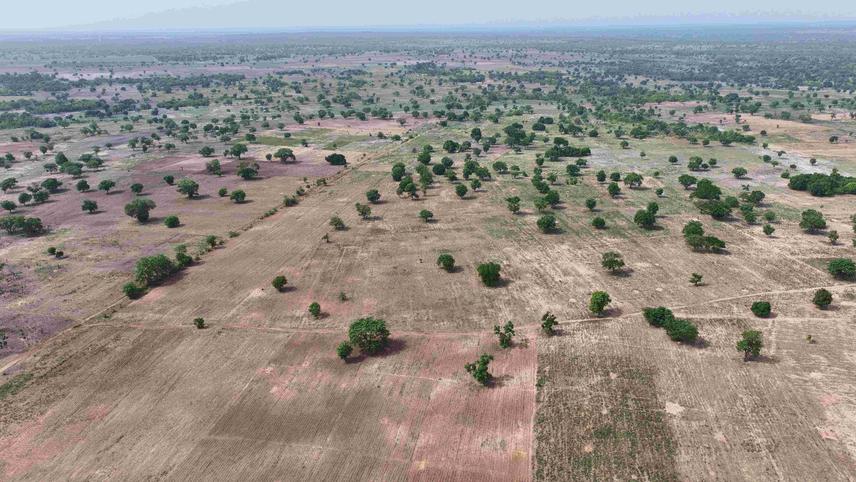
Agroecosystem landscape in northern Benin (c) Biaou Séverin (2025)
This habitat transformation has led to a significant decline in endangered native tree species of high socio-economic and ecological value, notably Afzelia africana (IUCN: Vulnerable), Pterocarpus erinaceus (IUCN: Endangered), and Khaya senegalensis (IUCN: Vulnerable). In total, 59% of monitored sites experienced losses in species richness and abundance, while natural regeneration remained very low (0.6%). Regeneration efforts by local communities have largely focused on exotic species, especially Anacardium occidentale, accelerating ecological imbalance and further threatening native biodiversity.
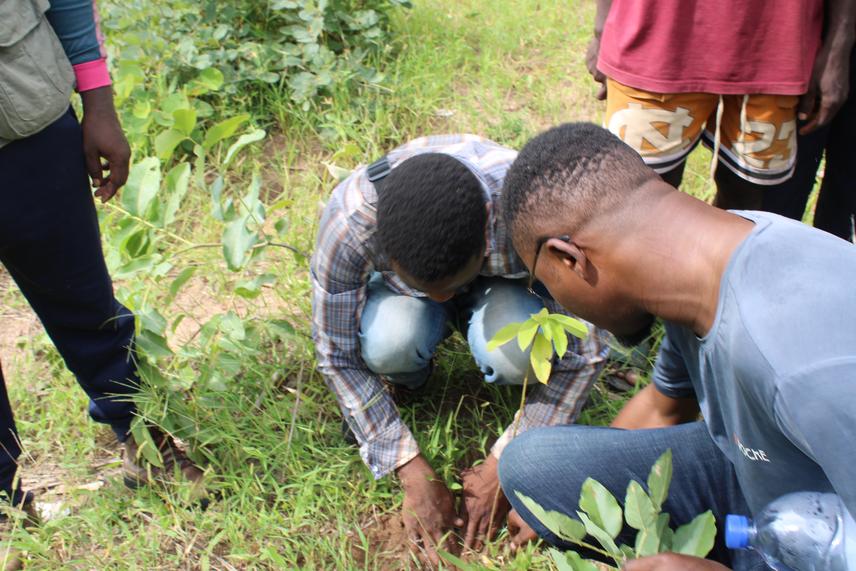
Restoration of degraded habitats with Milicia excelsa seedling in northern Benin (c) Biaou Séverin (2024).
Building on these findings, this project aims to move from diagnosis to action. Specifically, the project will train farmers in the technique to improve soil fertility and reduce pressure on forest land; identify the social, economic, and technical barriers limiting the adoption of native species in local community-led reforestation initiatives; support the large-scale production of seedlings of A. africana, P. erinaceus, and K. senegalensis through improved nursery practices; and restore degraded habitats through community-led planting in priority areas.
Ultimately, the project will contribute to long-term biodiversity conservation and sustainable livelihoods in Benin by strengthening local capacity in nursery management, increasing the density of endangered species, and promoting sustainable land management practices to reduce deforestation.