Pham Thi Hoa

Other projects
2 Jul 2024
Discovering Forest Musk Deer Populations from the Karst Mountains in Northern Vietnam

The forest musk deer (Moschus berezovskii) is a rare and elusive ungulate inhabiting montane forests of southern China and northern Vietnam. The species is listed as Endangered due to extensive illegal hunting for musk and other wildlife products, together with ongoing habitat degradation and disturbance (Wang & Harris, 2017). In Vietnam, historical records indicate that the species occurs primarily in the limestone karst forests of the northern region (Dang et al., 2008; Tran et al., 2021). However, its current distribution, population status, and conservation needs remain poorly understood because of the species’ cryptic behaviour and the lack of systematic field surveys.
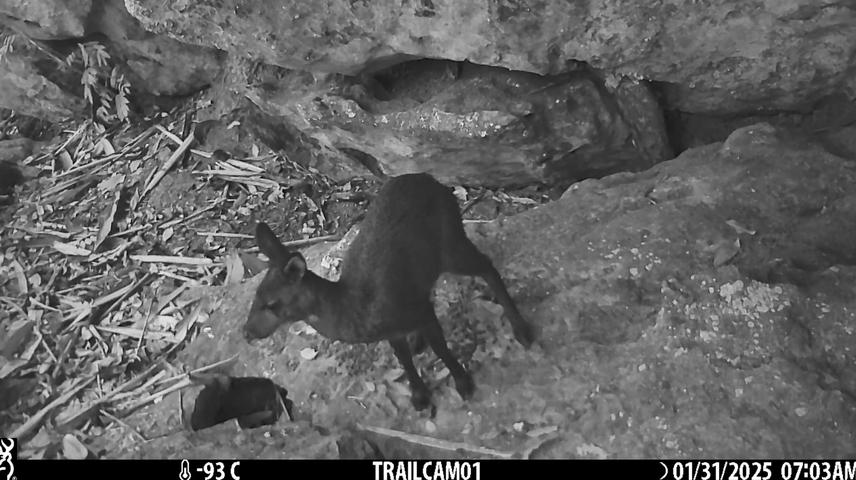
Forest Musk Deer in Than Sa - Phuong Hoang. (c) Hoa Pham
Recent surveys supported by a Rufford Small Grant confirmed the continued presence of forest musk deer in Than Sa – Phuong Hoang Nature Reserve through camera-trap records (Pham, 2024), providing important evidence that the reserve supports one of the few remaining populations in Vietnam. Nevertheless, the abundance, spatial distribution, and conservation status of this population remain unknown. At the same time, field observations and interviews with local communities indicate that illegal hunting, snaring, and other human disturbances continue to threaten wildlife throughout the reserve (Pham, 2024). Without robust ecological data, it is difficult for reserve managers to develop effective conservation actions for this highly threatened species.
This project aims to generate the first comprehensive assessment of the forest musk deer population in Than Sa – Phuong Hoang Nature Reserve. A systematic camera-trapping survey will be implemented across suitable habitats to estimate site occupancy and determine the species’ spatial distribution. Concurrent field surveys will identify and map key threats, including snaring, illegal hunting, and habitat disturbance, to better understand the factors influencing the species’ persistence. By combining ecological and threat data, the project will identify priority areas for conservation and provide the first baseline information needed to guide long-term monitoring. The findings will be shared with the reserve management authority and relevant stakeholders to strengthen protection efforts, support evidence-based management decisions, and develop practical conservation recommendations to improve the long-term survival of the forest musk deer in northern Vietnam.