Paul Onyango Machoni


Wetland ecosystems are vulnerable to human activities and natural disturbances. Historically, they have been underestimated, and many have been considered wastelands despite their vital ecological and hydrological significance (Okeyo-Owuor et al., 2012). In Kenya, wetlands cover about 3-4% of land area, about 14,000 km², but pressure from the increasing population has shrunk this to about 2% (MENR, 2012; GOK, 2006). Kapkatet wetland located between Kericho and Bomet Counties is an important cultural site for Kalenjin festivals and a key resource for the community, which largely depends on the wetland for their livelihood. However, there is generally low awareness among residents about the wetland’s ecological importance.
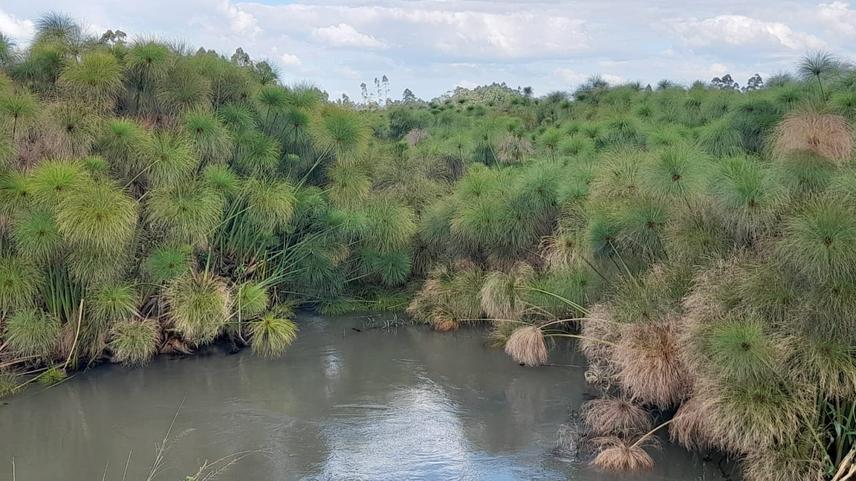
Asection of Kapkatet Wetland and a river © Paul Machoni
Kapkatet also supports diverse wildlife, including the Grey Crowned Crane (Balearica regulorum), which is listed as Endangered by the IUCN Red List. These cranes depend on wetlands for breeding, roosting, and feeding. Yet, the wetland faces multiple threats, including invasive species, pollution, unsustainable papyrus harvesting, overgrazing, and land conversion. These pressures compromise the wetland’s ability to sustain diverse ecosystems and local livelihoods.
Previous conservation efforts in the region have mainly focused on monitoring species populations, largely overlooking how wetland degradation affects invertebrates and crane foraging success. Research on invasive plant species as a key factor influencing food availability and nesting sites for Grey Crowned Cranes is also limited. Additionally, few initiatives effectively integrate conservation with local community needs.
This project proposes a community-led approach to address these gaps. It will assess invasive species, monitor invertebrate diversity and abundance, promote environmental education, and support training on sustainable livelihood strategies. By linking conservation with community engagement, the project aims to highlight the importance of protecting Grey Crowned Crane habitats, which also benefit other species and critical ecosystem services. Ultimately, this approach seeks to balance biodiversity conservation with the socio-economic needs of local communities, ensuring the long-term sustainability of the Kapkatet wetland. Therefore, by combining biodiversity monitoring and community participation, the project supports Rufford Foundation’s goals of fostering lasting conservation and empowering local communities.