Oumar Cisse

Mangrove forests in coastal Guinea provide essential ecosystem services, including fisheries habitat, shoreline protection, and carbon storage, yet they are increasingly threatened by unsustainable wood harvesting. In the Forecariah Prefecture, mangrove degradation is driven not only by local use but also by rising urban demand for fuelwood and construction materials from nearby cities, particularly Conakry. These external drivers remain poorly documented and insufficiently addressed in existing conservation efforts, limiting the effectiveness of current management strategies.
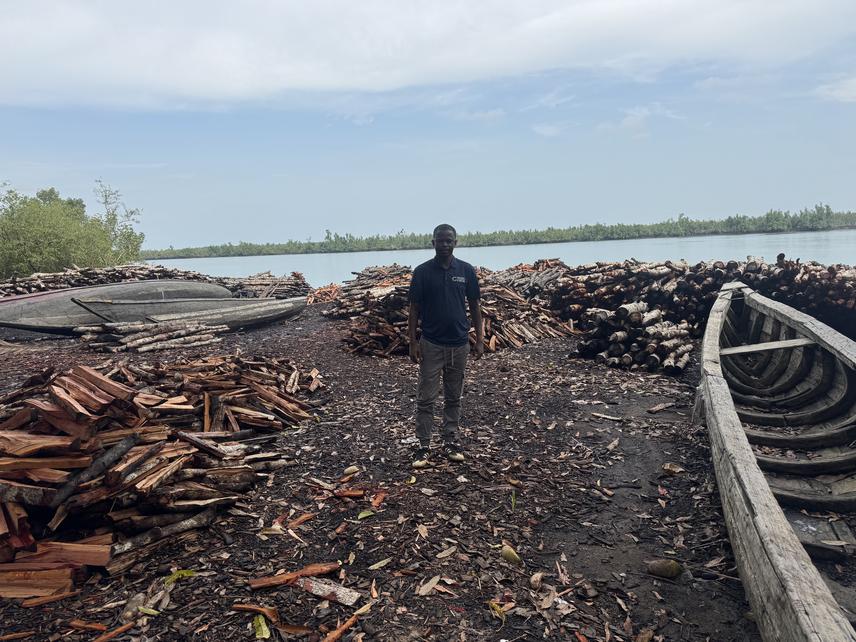
Oumar Cisse conducting mangrove conservation fieldwork in Guinea as part of his capstone research on reducing mangrove logging and strengthening community-based management. Copyright: © Oumar Cisse
This project aims to understand and reduce the external pressures contributing to mangrove logging while strengthening community-led conservation pathways. The research will combine socio-economic and ecological approaches to identify the actors, routes, and volumes involved in mangrove wood extraction. Fieldwork will include key informant interviews with traders, transporters, and resource users, as well as observational monitoring at transport sites to quantify extraction flows. Participatory mapping and community workshops will be conducted in four coastal villages representing diverse livelihood systems such as fishing, salt production, and fuelwood trading.
A central objective of the project is to translate research findings into practical management solutions. Working closely with local communities, the Forestry Department, and the NGO West Africa Blue, the project will co-develop district-level mangrove management and monitoring plans. These plans will define local roles in surveillance, strengthen governance mechanisms, and improve coordination between communities and authorities.
The project will produce several key outputs, including a gap analysis of mangrove extraction drivers, community priority reports, management plans, and policy recommendations. By combining scientific evidence with local knowledge, the project seeks to support equitable and sustainable mangrove governance in Guinea. Ultimately, the project will contribute to reducing mangrove degradation while enhancing community participation and long-term coastal resilience.