Matthew Estment


Critically endangered and threatened South African marine species, including African Penguins and sea turtles, face numerous well-documented pressures, such as overfishing, habitat degradation and low reproductive success. However, these species also inhabit coastal environments that are heavily influenced by human activities, highlighting the need to identify and better understand less visible threats, including contaminant exposure and pollution-related impacts.
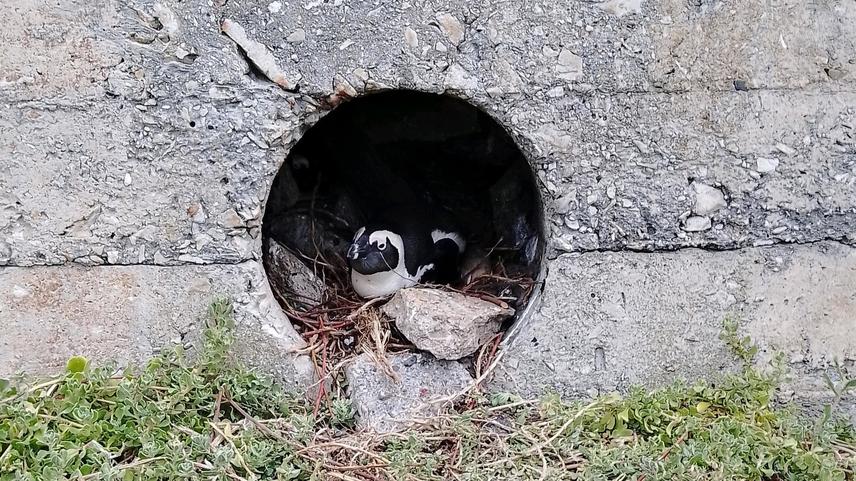
Penguins nesting in stormwater drains, increasing exposure to pollutants (c) Matthew Estment
This project aims to investigate the exposure of critically endangered African penguins (Spheniscus demersus) and two vulnerable sea turtle species – green turtles (Chelonia mydas) and loggerhead turtles (Caretta caretta) – to microplastics and per- and polyfluoroalkyl substances (PFAS). PFAS are a class of man-made chemicals with high chemical stability and resistance and cause a host of health problems, especially in marine life, most notable is their effect on reproduction.
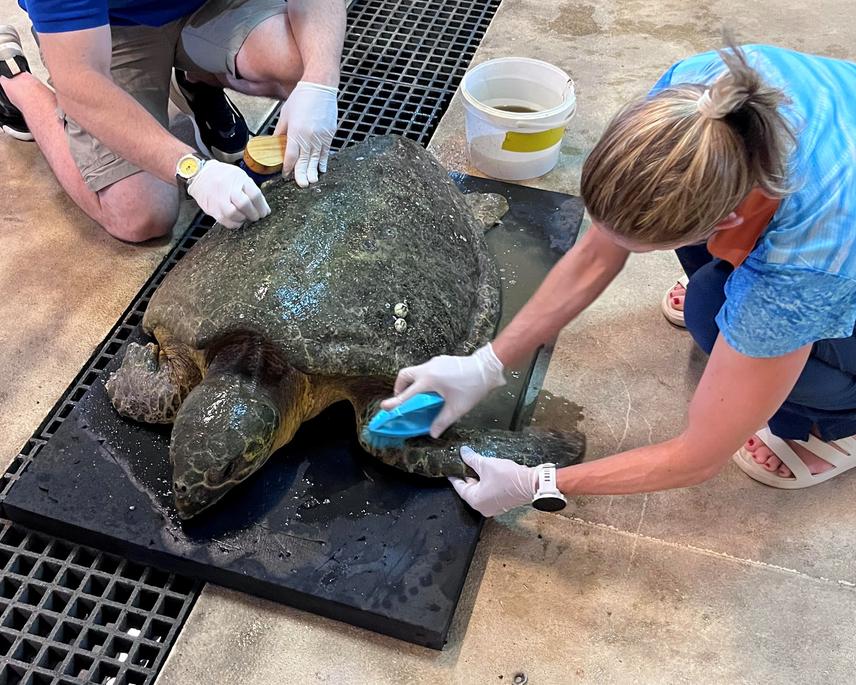
Sea turtle being treated at the rehabilitation facility before samples are taken for chemical analysis. (c) Marc Humphries
PFAS are also transferred from mother to egg (maternal offloading), which negatively impacts the survivability of already pressured egg-laying marine species such as African penguins and sea turtles. A lesser-known threat is that plastics, particularly microplastics , can absorb other pollutants in the water and when ingested, release these harmful pollutants into organisms. This synergistic threat can compound pollution exposure, and can further increase stress on these critically endangered and threatened species.
This project aims to assess PFAS concentrations and microplastic burdens in key marine species admitted for rehabilitation at aquariums and conservation organisations around South Africa (SAAMBR - Durban, Two Oceans Turtle Conservation Centre - Cape Town and SAPREC - Mossel Bay). The results of which, will provide critical information on the extent of pollutant exposure in South Africa’s marine environment and contribute to a better understanding of how emerging contaminants may affect the conservation and long-term survival of already threatened marine wildlife.
The study will generate new insights into the synergistic threat posed by these pollutants Findings will improve our understanding of how marine pollution affects endangered species in southern African waters and provide crucial information to guide conservation strategies and pollution mitigation efforts.