Mande Judith

Bats are an essential part of Rwanda’s biodiversity, yet in many communities they remain poorly understood and often feared. In Muhanga and Gisagara Districts, people often encounter bats in homes, schools, and local businesses as natural habitats continue to shrink. These close interactions combined with myths that associate bats with witchcraft, bad luck, or disease, have contributed to widespread negative perceptions. As a result, some communities burn colonies out of roofs, cut down roost trees, or demolish abandoned buildings used by bats, often without recognizing their ecological importance.
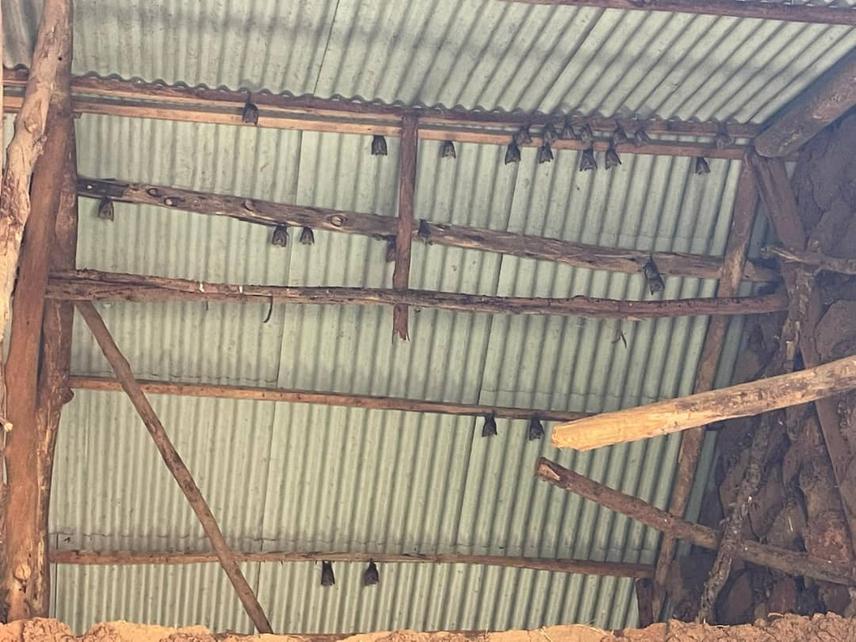
Bats roosting in a house at one of the project sites © Mande Judith
This project seeks to change that narrative by building awareness, strengthening local stewardship, and promoting the conservation of bat habitats in Muhanga and Gisagara.
The first aim is to reshape community attitudes through targeted awareness campaigns. Public meetings, school sessions, and radio talk shows will share clear, factual information on the ecological benefits of bats such as pest control, seed dispersal, and pollination, and address the myths that drive fear and persecution.
Educational materials in Kinyarwanda will reinforce these messages and ensure they reach diverse audiences. The second aim focuses on protecting key roosting and foraging habitats. With the participation of homeowners, local leaders, and youth groups, the project will map bat roosts across the districts using GPS and community knowledge.
These sites will then be used to guide conversations on roost protection and to establish simple, community-supported agreements that safeguard colonies from destruction. Engagement with local authorities will help encourage bat-friendly urban planning practices, including retaining native trees and reducing unnecessary disturbance of known roosts. The third aim is to generate reliable ecological data on the bat species. Regular field surveys will document species presence, colony sizes, threats, and habitat conditions.
This information will support national biodiversity databases and help inform conservation planning for species such as the African Straw-Coloured Fruit Bat (Eidolon helvum) and lesser-known insectivorous bats that are poorly studied in Rwanda.