Linh Manh Nguyen


Seagrass ecosystems are among the most productive marine habitats, providing critical ecological services such as carbon sequestration, sediment stabilization, and nursery grounds for fish. In Vietnam’s Con Dao National Park, seagrass meadows hold even greater significance as essential foraging habitats for endangered Dugongs (Dugong dugon) and sea turtles (Chelonia mydas, Eretmochelys imbricata). Despite the park’s protected status, conservation has focused mainly on turtle nesting beaches, leaving seagrass habitats poorly monitored and vulnerable to threats from coastal development, anchor scarring, destructive fishing, and climate change. This project aims to address this urgent gap by combining cutting-edge science with community-driven conservation.
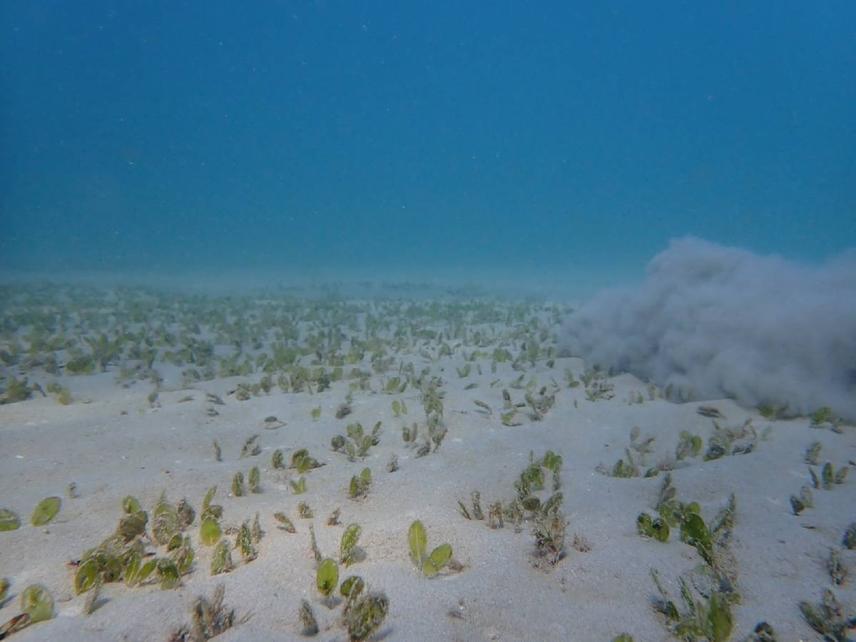
Seagrass bed in Con Dao 2021 © Linh Manh Nguyen
The main objectives are threefold. First, we will generate the first comprehensive GIS-based distribution map of seagrass beds in Con Dao using remote sensing (Sentinel-2) and ground-truthing surveys. This will provide baseline data to guide habitat management and inform Marine Protected Area zoning. Second, we will conduct a genetic diversity assessment of key seagrass species (Halophila ovalis, Halodule uninervis, Enhalus acoroides) using molecular markers. This analysis will evaluate population health, resilience, and connectivity, ensuring conservation strategies are rooted in robust scientific evidence. Third, we will develop a community-based conservation model through participatory workshops with local fishermen, tourism operators, and park rangers. This will build local capacity for monitoring and stewardship, integrating conservation into the socio-ecological fabric of Con Dao.
The expected outcomes include: (1) a scientifically validated seagrass distribution map accessible to park managers and policymakers; (2) genetic diversity data published in open-access journals and deposited in global databases; and (3) a community-led conservation plan, reinforced by training and volunteer monitoring programs. By embedding local participation, the project ensures long-term sustainability and complements Con Dao’s successful sea turtle program.
Beyond local impacts, this project contributes to global conservation priorities, including UN Sustainable Development Goal 14 (Life Below Water) and the IUCN Marine Conservation Strategy. By protecting the ecological foundation of seagrass meadows, it safeguards globally threatened species, enhances community livelihoods dependent on nearshore fisheries, and strengthens Vietnam’s capacity for habitat-based conservation. With support from the Rufford Foundation, this initiative will deliver high-impact, practical outcomes that bridge science and society, laying the groundwork for lasting seagrass and marine megafauna conservation in Vietnam.