Lauren Webster

Within Northwestern Ecuador, Chocó-Andean ecosystems persist within a fragmented network of expanding agriculture. Despite the rich bat diversity and endemism in Chocoan habitats, knowledge gaps due to altitudinal limitations, poor conservation policies and funding bias have resulted in a deficiency of data. As a result, it remains unknown how frugivorous phyllostomids, which are key agents of forest restoration, respond to land use change.
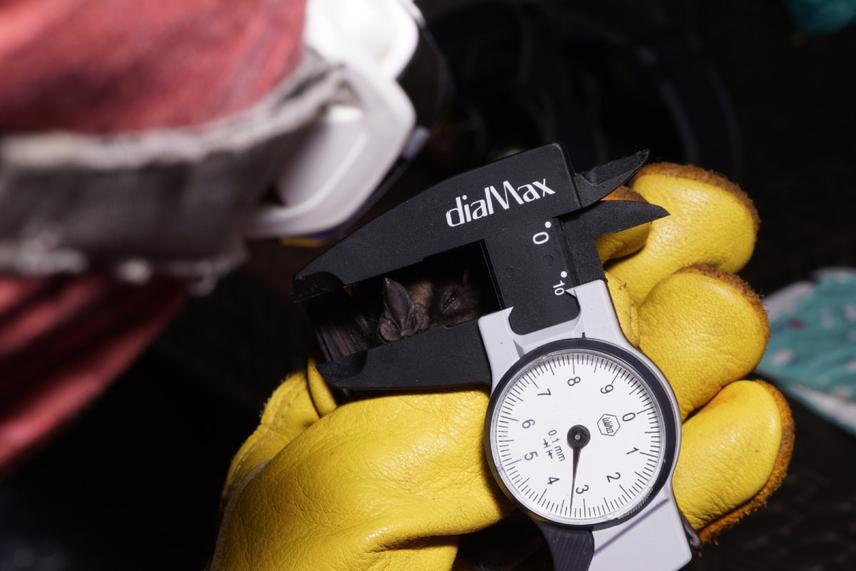
Recording morphological measurements of Platyrrhinus albericoi © F.L Alex Neugebauer
This project will assess how land use change affects frugivorous bat communities, their diets, and gut microbiota in forested and monospecific landscapes. Using non-invasive faecal sampling from mist-netted bats, we will identify shifts in community assemblage, dietary ecology and microbial health linked to habitat quality. Findings will guide diet-informed reforestation on degraded agricultural land. Thus creating a living lab to monitor (A) ecosystem recovery during early succession and (B) the response of frugivorous bats to restoration initiatives which include preferred food resources. As varied frugivorous phyllostomids are known to disperse pioneer and late stage successional species, focusing on bat-plant mutualisms may prove essential for long-term ecosystem functionality through informed restoration.
By involving local communities in the research, we hope to encourage community-led research and restoration, by promoting the socioeconomic value of bat-provided services in the region, such as pest control and pollination. Community participation in the form of local events and school engagement will also improve negative perceptions of bats and enhance the enthusiasm towards restoration and conservation efforts in the region. The project will inform scalable and sustainable conservation initiatives that acknowledge local communities and culture as a vital component of success.
The proposed project encourages the conservation of threatened and data deficient frugivorous Phyllostomids within pre-montane Chocoan ecosystems by (A) investigating shifts in community dynamics, microbiome, and diet in response to land modification; (B) encouraging the involvement of local communities in conservation and research; and (C) increasing habitat and diet resource availability through reforestation.