Jeanne Emma Miarisoa


Other projects
20 Oct 2022
Habitat Suitability, Population Size and Distribution of the North-Western Madagascar’s Lemurs: Implications for their Conservation

12 Nov 2024
Taxonomy and Abundance Study of Mouse Lemurs: Conservation of Nocturnal Lemurs in the Ambalakida Forest, Northwestern Madagascar
The project focuses on the Ambalakida Forest, a dry forest in northwestern Madagascar that has been managed by local communities since 2012 but does not yet have official protected area status. This forest is home to several endangered lemur species, including Coquerel’s sifaka (Propithecus coquereli), a lemur classified as critically endangered, as well as Eulemur fulvus, Microcebus murinus, and Microcebus ravelobensis.
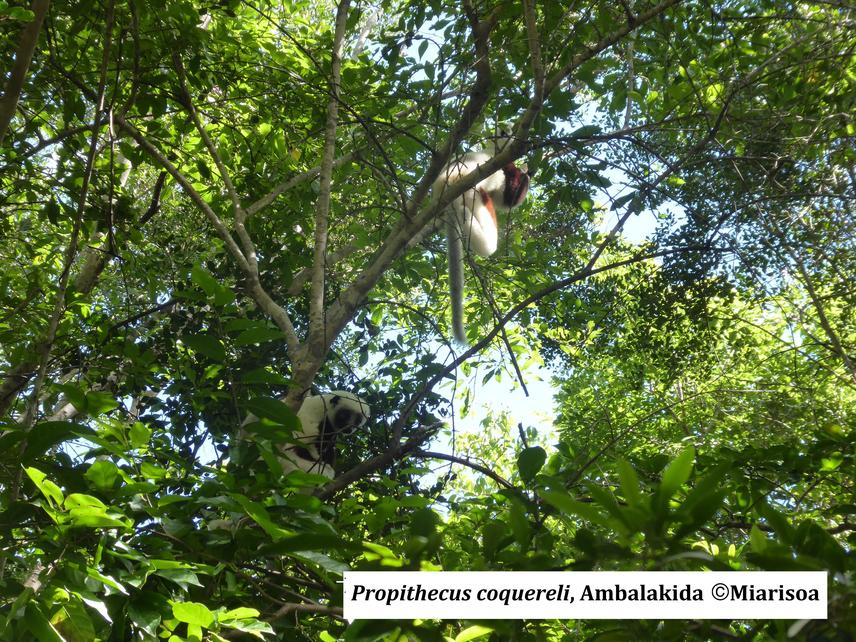
Propithecus coquereli, Ambalakida (c) Miarisoa
The project builds on the results achieved through two previous Rufford Small Grants and funding from the Van Tienhoven Foundation. This work has improved our understanding of the lemurs’ ecology, the state of their habitat, and the threats facing the forest, while also strengthening the capacities of local communities, guides, and students.
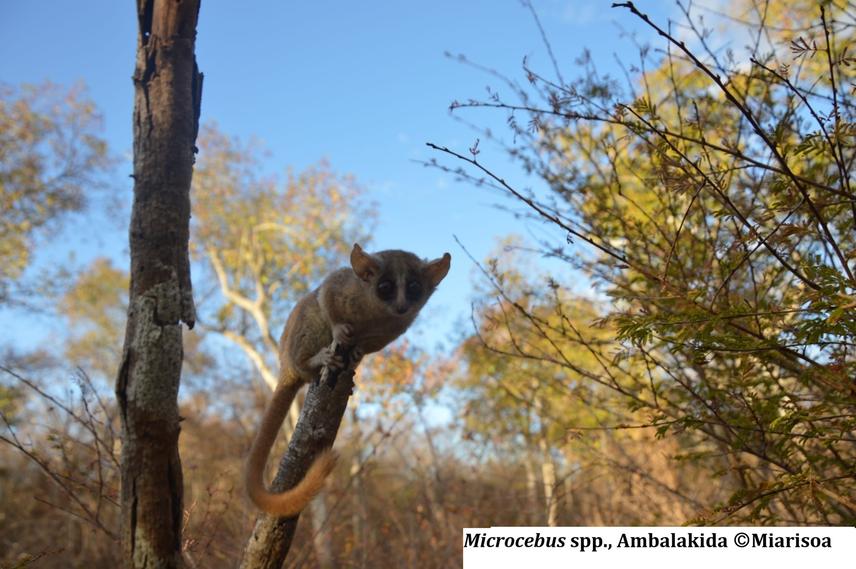
Microcebus spp., Ambalakida (c) Miarisoa
The main objective of this Boost Grant is to translate scientific knowledge into concrete conservation actions. Planned activities include the official demarcation of the forest, the identification of priority areas for lemur conservation, the establishment of participatory management with local communities, the restoration of degraded areas through reforestation, and the development of income-generating activities to reduce local communities’ dependence on forest resources.
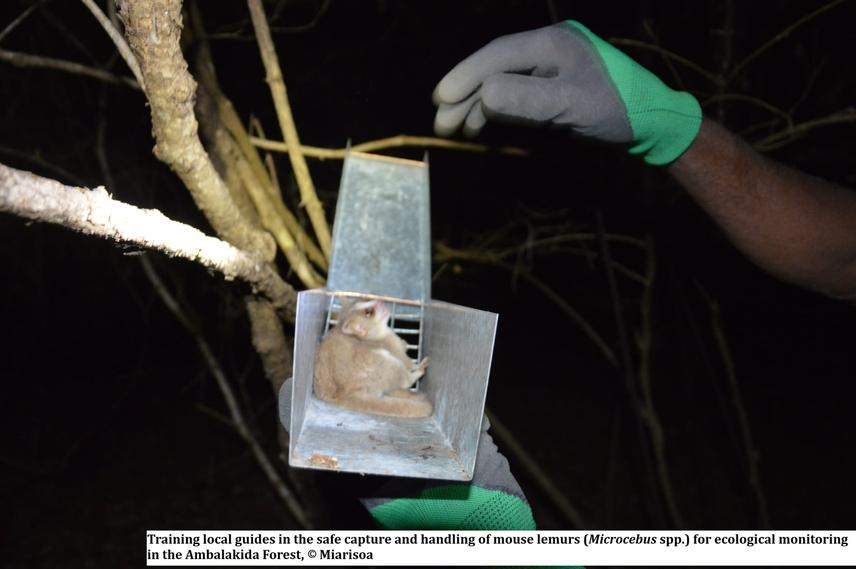
Training local guides in the safe capture and handling of mouse lemurs (Microcebus spp.) for ecological monitoring in the Ambalakida Forest (c) Miarisoa
The project will be implemented in collaboration with local communities, students, national institutions, universities, and other technical partners. It also benefits from the support of the Ministry of Environment and Sustainable Development, which will facilitate institutional coordination and the integration of results into regional and national conservation strategies.
À long terme, ce projet contribuera à améliorer la conservation de la forêt d’Ambalakida, à protéger durablement les populations de lémuriens menacés, à renforcer la résilience de l’écosystème et à poser les bases d’une éventuelle reconnaissance officielle du site en tant qu’espace de conservation.