Fidèle Ezéchiel Koffi Hounnouvi


Other projects
21 Jun 2024
Saving Vultures in Benin: Reducing Habitat Loss and the Illegal Slaughter of Vultures with the Involvement of the Local Community in North-East Benin

The Lokoli Swamp Forest in Benin represents a critical yet understudied biodiversity hotspot, harbouring two endangered primate species: the white-thighed colobus (Colobus vellerosus) and the red-bellied monkey (Cercopithecus erythrogaster). These primates face escalating threats from habitat degradation, hunting, agricultural expansion, and climate change, which jeopardise their populations and the fragile swamp ecosystem. This project, titled "Conserving Colobus vellerosus and Cercopithecus erythrogaster: Integrating Monitoring, Threat Assessment, and Community Engagement in Lokoli Swamp Forest, Benin," seeks to safeguard these species through a multifaceted, evidence-based conservation strategy.

Systematic survey of primates by canoe along a transect. © Boko Wenceslas
Our primary aims are to establish baseline ecological data on the primates' population status, distribution, and habitat use; identify and map key anthropogenic and environmental threats; assess the impacts of climate change on their future viability; and foster sustainable community involvement to ensure long-term protection. By integrating advanced technological tools with participatory approaches, we aim to bridge scientific research with local action, ultimately informing targeted management plans and advocating for formal site protection in alignment with Benin's national conservation priorities.
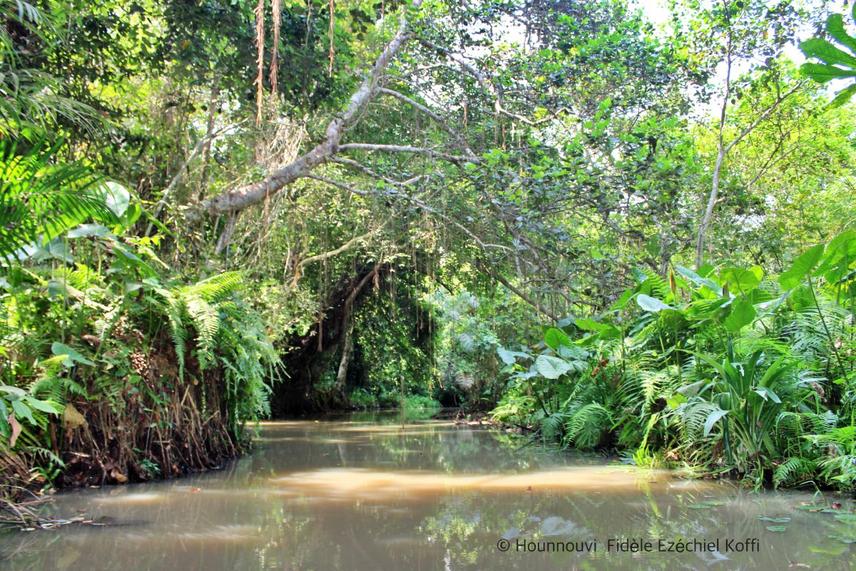
Flooded Forest channel characteristic of the lokoli swamp forest ecosystem. © Hounnouvi Ezéchiel
To achieve these goals, we will deploy camera traps and drones for non-invasive monitoring across the forest, capturing data on primate abundance, behaviour, and spatial distribution. These technologies will enable efficient surveys in challenging swamp terrain, minimising disturbance while providing high-resolution imagery for habitat analysis. Complementing this, species distribution modelling (SDM) will incorporate current ecological variables and future climate scenarios from IPCC projections to predict shifts in suitable habitats, highlighting areas vulnerable to warming temperatures, altered rainfall patterns, and sea-level rise. Community-based surveys will engage local residents through structured interviews and participatory mapping to document threats such as poaching, logging, and farming encroachment, while also identifying opportunities for alternative livelihoods.
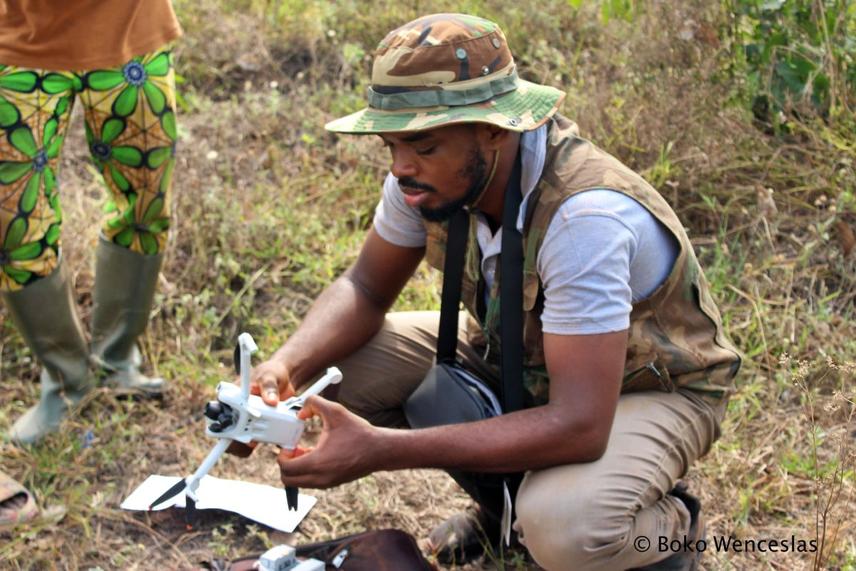
Installation of camera traps in the Lokoli Swamp Forest. © Boko Wenceslas
Education and outreach form a cornerstone of the project, with workshops, school programs, and citizen science initiatives designed to raise awareness about the primates' ecological roles and the forest's ecosystem services, including water regulation and carbon sequestration. By empowering communities as stewards, we draw on proven models from similar African contexts where community-led conservation has reduced unsustainable practices and enhanced biodiversity outcomes.
Expected results include comprehensive reports on primate demographics and threats, spatial maps for priority conservation zones, peer-reviewed publications disseminating findings, and strengthened local capacities for ongoing monitoring. This initiative not only addresses immediate risks but also builds resilience against climate uncertainties, contributing to global efforts for primate conservation and sustainable forest management.