David Nibishaka


Other projects
21 Sep 2021
Promoting the Conservation of Urban Dwelling Bats and their Roosting Habitats in the Southern Province of Rwanda through Community Outreach and Research

26 Mar 2024
Habitat Restoration, Monitoring, and Community Engagement for the Conservation of Bats in Urban Areas of Southern Province of Rwanda
This project builds on two previous Rufford supported projects to strengthen and expand urban bat conservation in the Southern Province of Rwanda. Although bats provide essential ecosystem services such as insect control, seed dispersal, and pollination, they continue to face increasing threats from urban expansion, tree cutting, disturbance of roosting sites, and widespread misconceptions. Negative perceptions of bats particularly following recent disease outbreaks have contributed to the destruction of important roosting habitats in schools, public spaces, and residential areas.
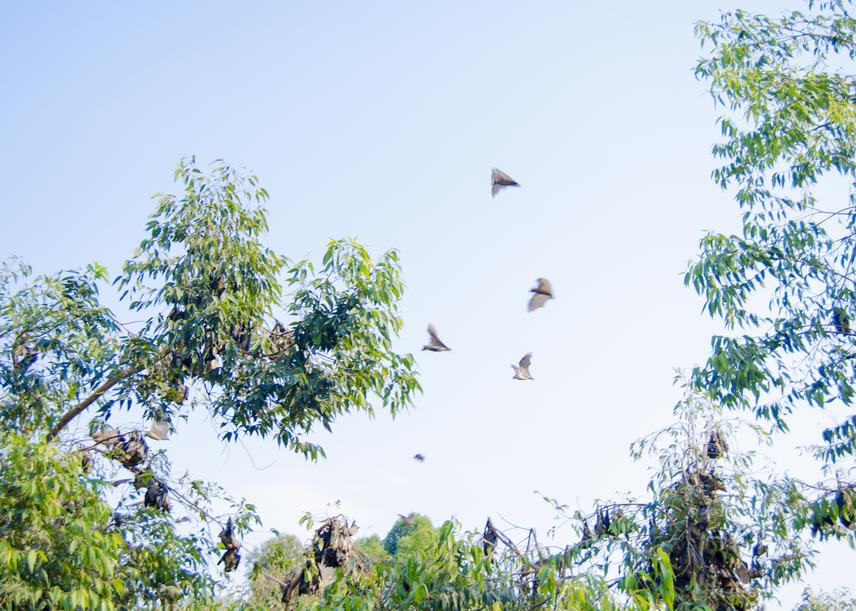
Fruit bats emerging from their daytime roost in Ruhango District (c) David Nibishaka
The project aims to promote long-term coexistence between people and bats through community-led conservation. The project will identify and protect important bat roosting sites in both trees and buildings, restore habitats through the planting of indigenous and fruit tree species, and establish simple community conservation agreements to encourage local stewardship of key roost sites.
Community education and awareness will remain central to the project. Schools, local communities, and bat conservation clubs will engage in interactive conservation activities to increase understanding of the ecological importance of bats, address misconceptions, and reduce fear-driven persecution. Awareness will be further strengthened through community meetings, local radio programmes, and conservation signboards installed at key bat roosts. Additionally, the project will further strengthen the capacity of bat conservation champions, a community-based network established through previous projects. These champions will receive refresher training, monitoring equipment, and support to continue collecting data on bat populations and threats.
To encourage long-term commitment, BCC groups will also receive small livelihood incentives linked to conservation. Finally, the project will develop a practical urban bat conservation guide in both English and Kinyarwanda, making project lessons accessible to schools, local authorities, and conservation practitioners.