Clément Dabone


Other projects
12 Sep 2023
Breeding Status and Reproductive Performance of the White-Backed Vulture Gyps africanus in the Nazinga Ranch, Burkina Faso

In recent decades, vulture populations in West Africa have decreased substantially (Rondeau and Thiollay 2004; Thiollay 2006a, 2006b; Ogada et al. 2016; Mullié et al. 2017; Nosazeogie et al. 2018).
In the 2000s, Rondeau and Thiollay (2004) and Thiollay (2007) alerted the ornithological community to the plight of vultures and their current situation in West Africa remain worrisome (Daboné et al. 2024). Rondeau and Thiollay (2004) and Thiollay (2006a, 2006b) conducted road counts within protected and unprotected areas in Burkina Faso in 1969–1973, and then they repeated these counts 30–35 years later in 2003–2004.
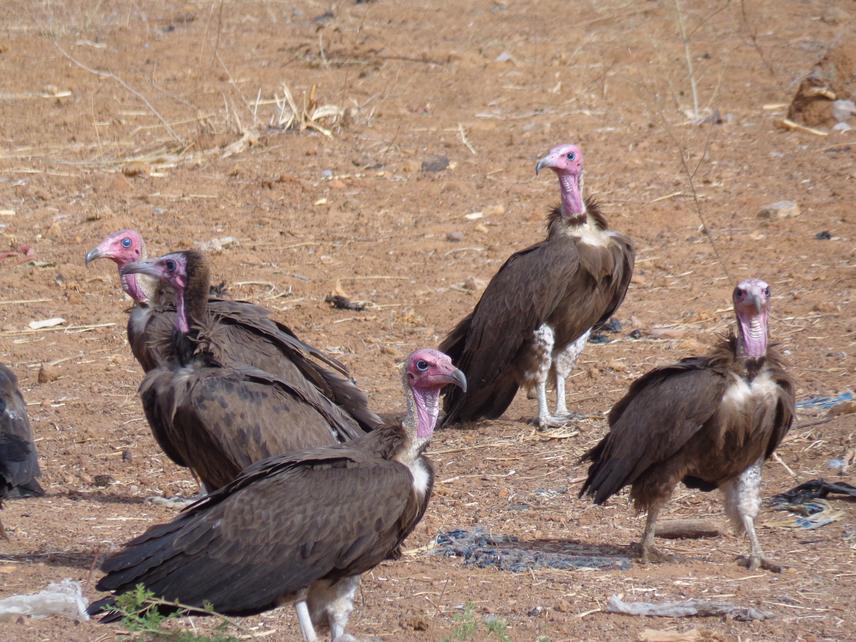
Hooded vultures (c) Clément Dabone
In 2019, we repeated these road counts using the same routes and methods and a comparison between early and this study shows that populations of Hooded vulture are still declining in Burkina Faso. The number of Hooded vultures per 100 km decreased from 122 to 75 (a decline of 38%) over the last five decades within unprotected area. The main causes of these populations decline are unintentional poisoning, decreasing food availability, and the trade in vulture body parts for Traditional Medicine.
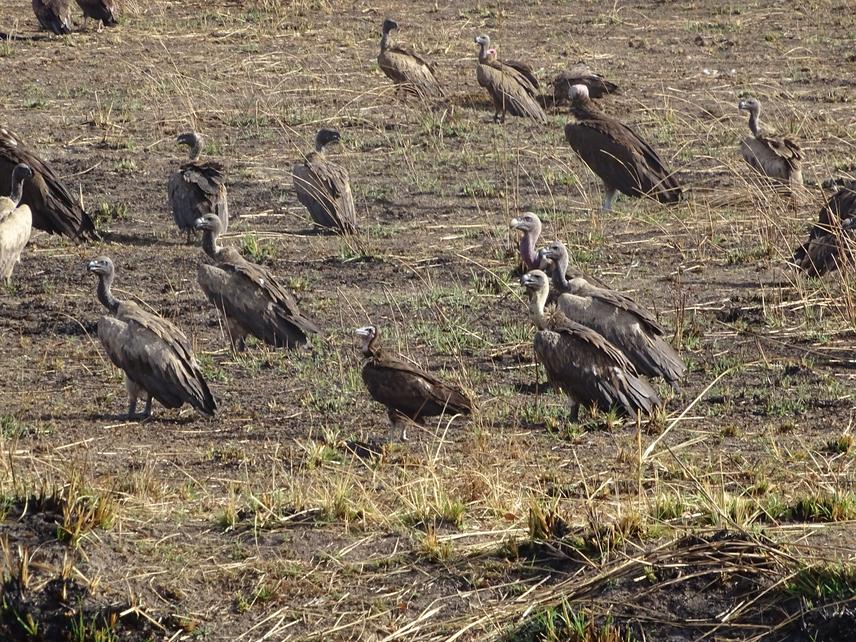
White backed, hooded vultures (c) Clément Dabone
To assist in ensuring a future for this species, continuous monitoring of the species is needed, both to increase our knowledge of its population trends, and to further fine-tune conservation efforts in response to current and future population trends and threats. More than five years after, we wanted to determine whether the populations of this vulture in Burkina Faso have continued to decrease, remained stable, or increased since 2019.
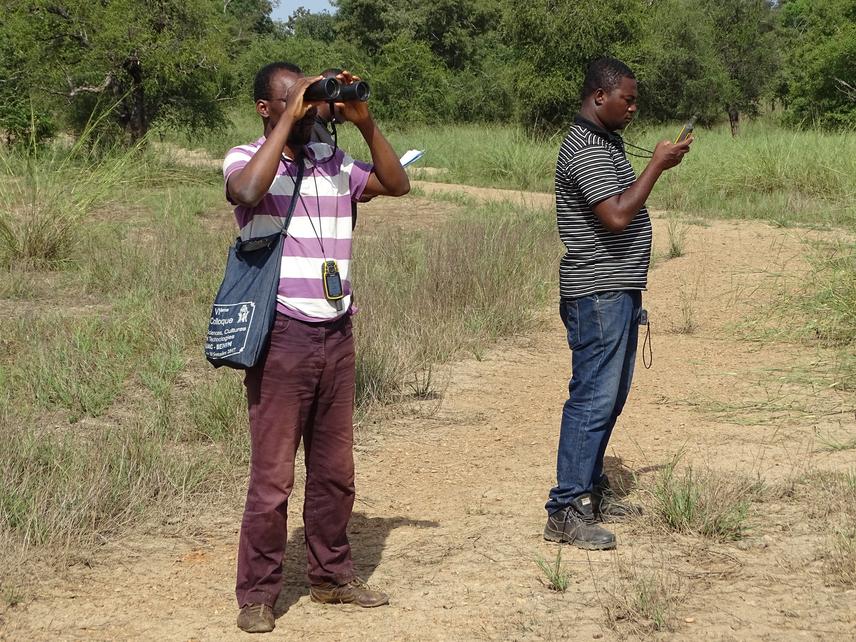
Vulture census on transects (c) Clément Dabone
Concurrently, we will investigate the causal factors that have been, or still are, responsible for vulture decline in Burkina Faso and will also implement conservation measures, including awareness campaigns among local communities on the vulture’s ecological values and its impact on human and livestock life and health as well as best practices to adopt in their conservation issue in order to increase positive perception toward vulture and willing to protect them and decrease in vulture poisoning incidents.