Chima Iheaturu


This project aims to support the conservation of the critically endangered Preuss’s Red Colobus (Piliocolobus preussi) in the Oban Division of Cross River National Park, Nigeria. This primate species is under severe threat from habitat loss, fragmentation, and hunting, and it survives only in a few remaining forest areas in West Africa. The project seeks to identify key habitats, monitor ongoing threats, and promote conservation actions that are grounded in both scientific data and local knowledge.
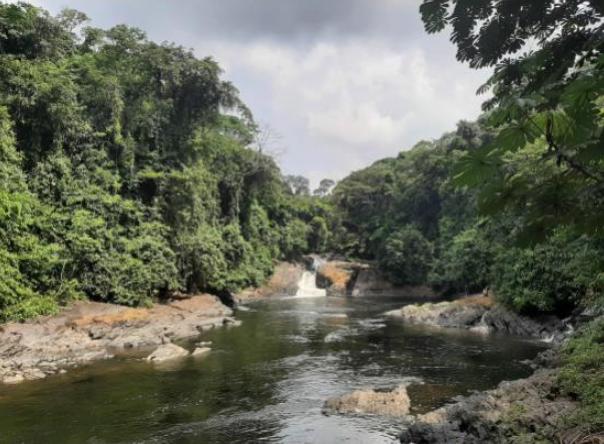
Kwa River flowing through the lush rainforest of Cross River National Park, Nigeria. The river is a vital part of the park’s hydrology and biodiversity, supporting a wide array of flora and fauna in the Oban Division. © Chima Iheaturu
We will use a combination of satellite imagery, drone surveys, and ground-based fieldwork to map forest condition and track changes over time. Participatory mapping sessions will be conducted with local communities to document observations of the species and gather insights on areas of ecological and cultural significance. This integrative approach will help identify priority conservation zones and inform habitat suitability modelling.
A core component of the project involves community engagement and awareness raising. Through workshops, storytelling sessions, and collaboration with local leaders, the project will foster dialogue on conservation challenges and promote the protection of key species and habitats. Educational materials will be developed to support biodiversity knowledge among youth and adults alike.
The project will work closely with partners such as the Wildlife Conservation Society and the Cross River State Forestry Commission. Results will be shared through reports, presentations, and public outreach to ensure that findings are accessible and actionable.
By linking advanced monitoring techniques with participatory approaches, this initiative will contribute to the conservation of one of West Africa’s most threatened primates and strengthen local stewardship of tropical forest landscapes. The approach can serve as a model for conservation in similar regions facing pressures on biodiversity.