Cecilia Montauban


Africa’s Upper Guinea rainforests are among the most threatened biodiversity hotspots globally, facing rapid loss from agricultural expansion, gold mining, and deforestation. Despite their importance, bat diversity in this region remains poorly understood and underrepresented in conservation planning. This project focuses on a newly discovered and potentially highly threatened bat species belonging to the genus Glauconycteris, identified through recent field surveys and genetic analyses in southwestern Ghana. The species appears to be previously undescribed and may have an extremely restricted distribution, making its conservation urgent.
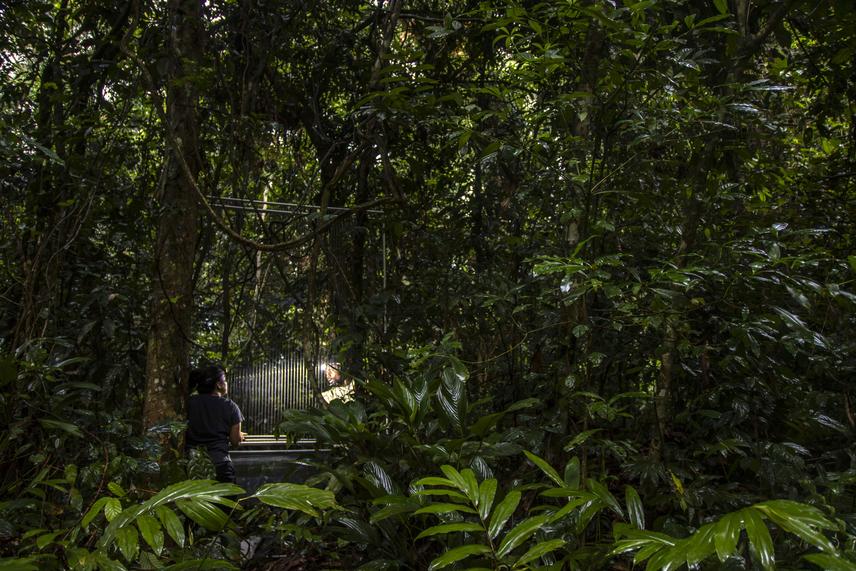
Harp Trap - Setting a triple bank harp trap in the rainforest to capture bats. (c) Adrià López-Baucells
The primary aim of this project is to formally describe this cryptic bat species and generate the ecological knowledge needed to guide its conservation. Using an integrated approach combining field surveys and tracking, we will characterise its biology, habitat use, and distribution, enabling a formal taxonomic description and IUCN Red List assessment. We also aim to assess threats to the species and its habitat, including forest fragmentation, mining, and agricultural expansion. By mapping its distribution and identifying critical habitats, the project will highlight priority areas for protection within and around Key Biodiversity Areas.
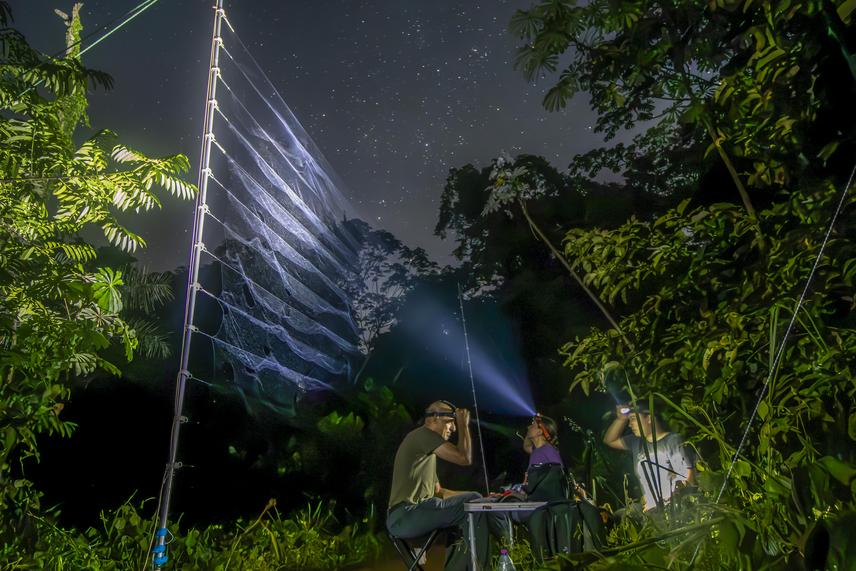
Field team set up on site, checking a triple-high mist net used to capture high flying bats. (c) Adrià López-Baucells
A key component of the project is community engagement and capacity building. Working in partnership with local Community Resource Management Areas (CREMAs), the project will deliver training to local rangers, and outreach events to raise awareness of bats and their ecosystem services, such as pest control and pollination. These activities will support local stewardship, strengthen monitoring capacity, and foster positive attitudes toward bat conservation.
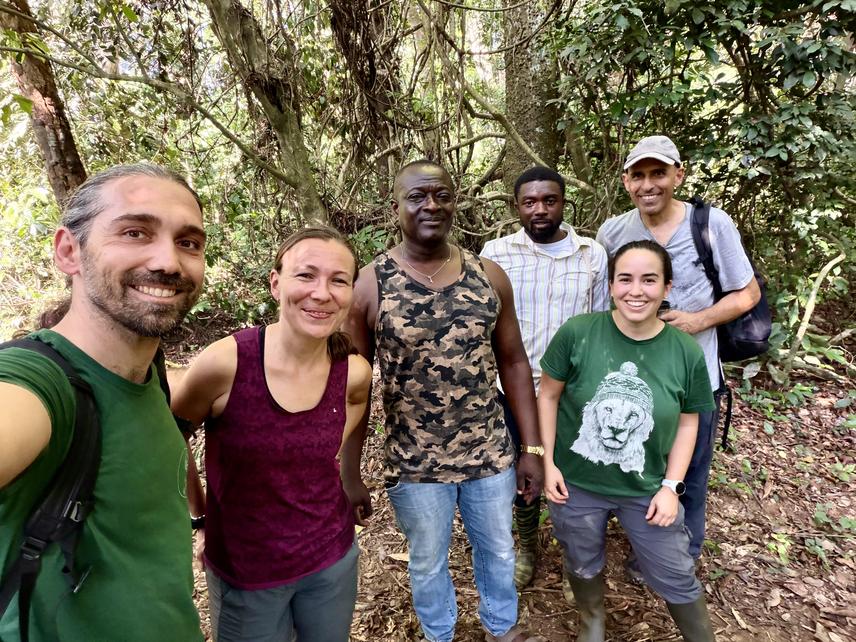
Field team in Neung South Forest Reserve, all set up and ready for nightfall to start catching bats. (c) Cecilia Montauban
By integrating taxonomy, ecology, and community engagement, this project aims to fill critical knowledge gaps, support national and international conservation priorities, and strengthen the case for protecting Ghana’s remaining rainforest fragments and their unique biodiversity.
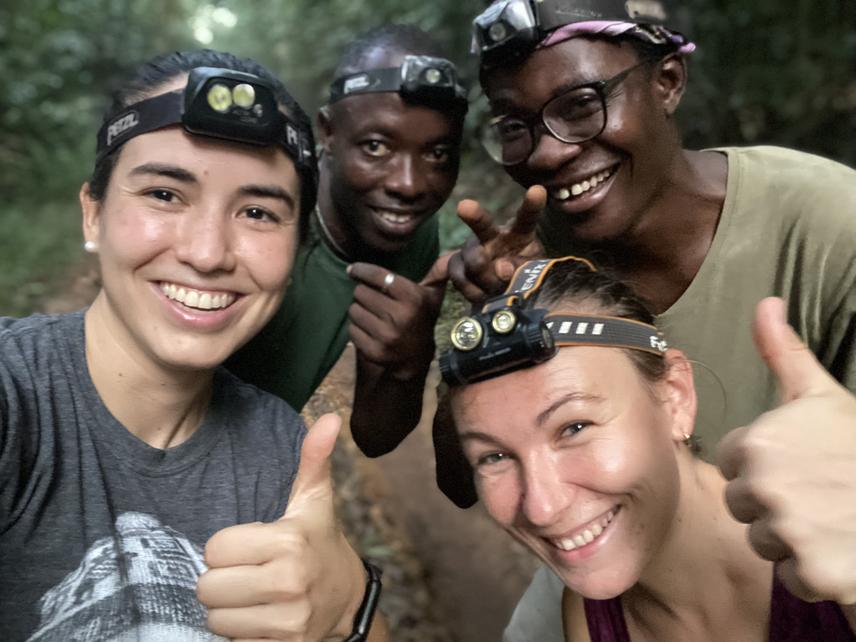
Part of the field team in Ankasa Resource Reserve, ready for a night of bat surveys. (C) Cecilia Montauban