Ave Owen


This project aligns advanced conservation technology and community-based monitoring to achieve human-elephant coexistence in communities bordering Kuiburi National Park, Thailand.
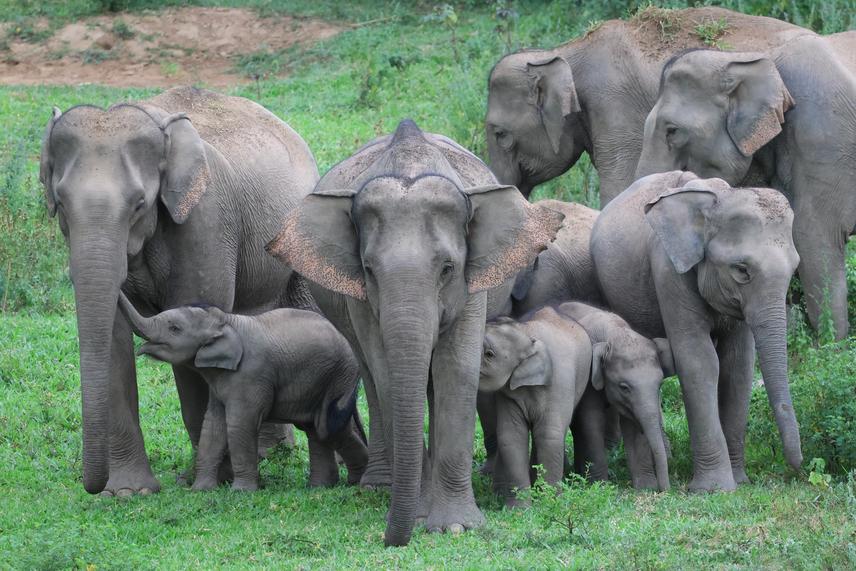
With an estimated population of 300 individuals, Kuiburi National Park in Prachuap Khiri Khan, Thailand is one of the last remaining strongholds for wild elephants in Southeast Asia. (© Bring The Elephant Home)
UO Vision Glory camera traps are used to identify individual elephants engaging in crop foraging behavior and assess individual spatio-temporal crop foraging patterns. These SMS-integrated, AI-assisted camera traps will form an Early Warning System, generating real-time alerts for farmers and elephant response rangers, and ultimately reducing negative human-elephant interactions and crop damage incidents. In addition to monitoring detections outside the protected area, individual-level monitoring, behavior sampling and social network analysis within Kuiburi National Park will establish a database of individual elephants and inform individual behavior profiles that support evidence-based, targeted mitigation when specific individuals are detected in agricultural areas.
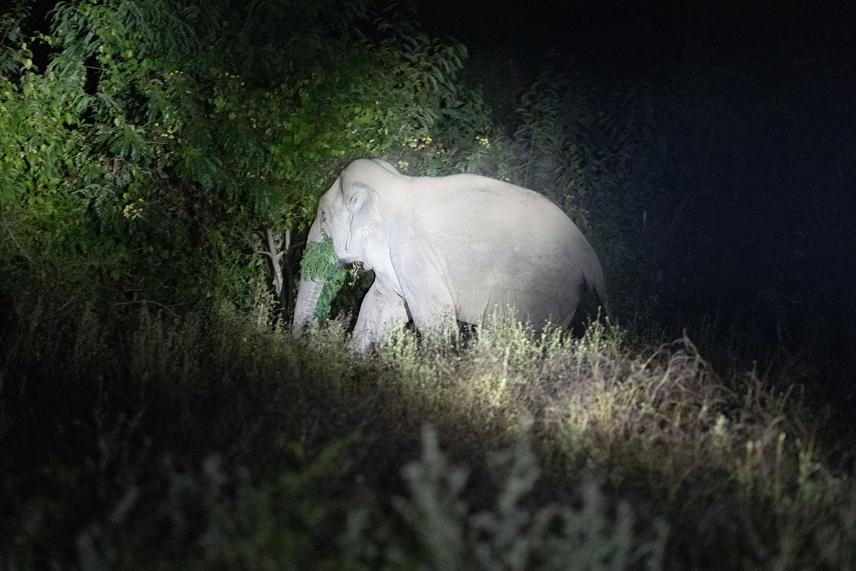
Elephants leave the unfenced protected area and damage crops and property on a nightly basis, but the spatio-temporal trends of individual elephants engaging in this behavior have never been studied. (© Dhruv Rungta)
Further, participatory workshops will equip safari guides, park rangers and local farmers with skills in elephant identification and establish a co-management strategy for the deployment and maintenance of the Early Warning System. This community-based approach supports equitable conservation management and increases social resilience through shared decision-making that addresses human-elephant conflict at the regional level.