Arouba Arshid


Human–wildlife conflict is a growing global concern, particularly in regions where expanding human populations increasingly overlap with wildlife habitats. In Azad Jammu and Kashmir (Pakistan), this issue has intensified around the Moji Game Reserve, a protected area that supports diverse wildlife including the common leopard (Panthera pardus), Asiatic black bear, grey goral, musk deer, and various pheasant species. Over recent years, the decline in natural prey populations caused by illegal hunting, deforestation, and habitat degradation has forced leopards to move beyond protected areas in search of food. Consequently, livestock depredation and human–leopard encounters have sharply increased, leading to economic losses for local communities and retaliatory killings of leopards.
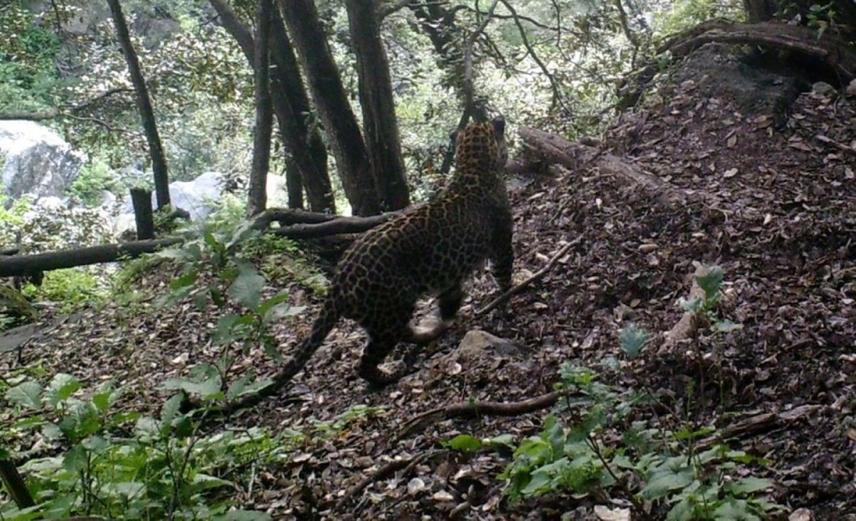
A common leopard moving through the forested landscapes of Azad Jammu and Kashmir. (Captured by team member Dr. Babar Zahoor using camera traps.)
This project aims to assess the intensity, causes, and possible solutions to human–leopard conflict in areas outside of the Moji Game Reserve. The study will evaluate the spatial and temporal patterns of human–leopard conflicts (through household interviews and field verification of reported incidents) and
Identify the ecological and socio-economic drivers pushing leopards out of protected areas, including prey depletion and habitat loss.
The study will develop and recommend effective conflict mitigation strategies in collaboration with government agencies, NGOs, and local communities.
The research will combine semi-structured community interviews, transect surveys to assess prey availability, and field verification (triangulation) of conflict incidents. Data will be analysed both qualitatively and quantitatively using thematic coding, Microsoft Office, ArcGIS, and R software.
Beyond data collection, the project emphasises capacity building and awareness through community meetings, school workshops, and stakeholder seminars. These outreach activities will promote coexistence, strengthen local participation, and encourage government and NGO collaboration in conservation planning.
Ultimately, the study will provide baseline data and practical recommendations for reducing human–leopard conflict, conserving the endangered leopard population, and maintaining ecosystem balance in the region. The findings will support the Department of Wildlife and Fisheries and partner NGOs in integrating community perspectives into future management and mitigation programs, ensuring long-term sustainability of both wildlife and livelihoods.