Stephen Ssemwaka


This project aims to promote coexistence between local communities and Grey Crowned Cranes by combining habitat protection, community engagement, and sustainable agricultural practices in Lwengo District, Central Uganda. The Grey Crowned Crane (Balearica regulorum), is globally Endangered and continues to face steep population declines. Lwengo District is home to one of the country’s largest remaining crane populations, yet increasing pressure on wetlands has created serious conservation challenges. As wetlands are converted for agriculture, cranes lose access to safe breeding and feeding areas and increasingly forage on nearby crops. This has led to escalating conflict, with some farmers resorting to poisoning cranes to protect their livelihoods. Such incidents, though often undocumented, threaten the long-term survival of the species in one of its most important strongholds.
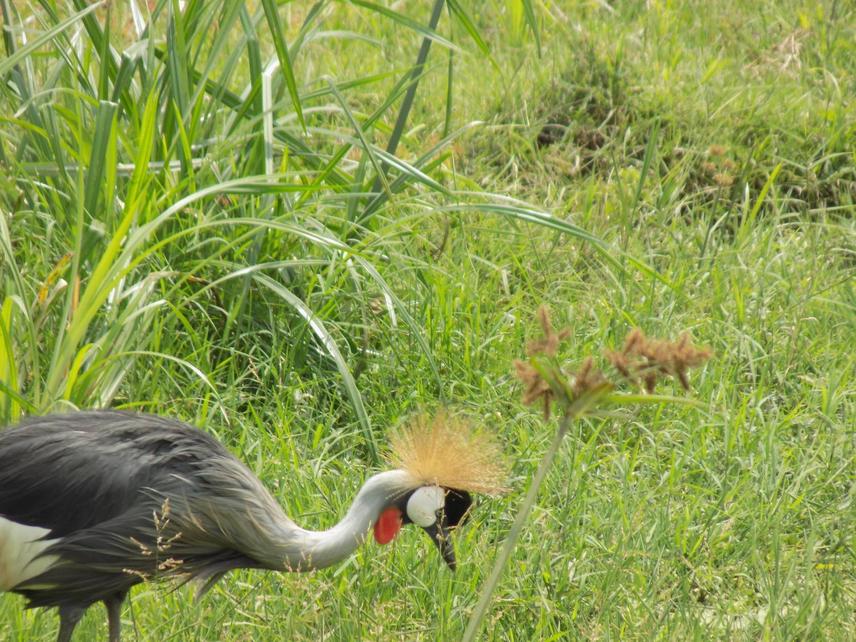
A Grey Crowned Crane foraging in Lwengo. ©Stephen Ssemwaka
The first objective is to identify and map new crane breeding sites across Lwengo’s wetlands and surrounding farmlands. Through community consultations and targeted field surveys, we will document nesting areas, produce georeferenced maps, and support local authorities and residents in monitoring and safeguarding these sites.
To reduce human–crane conflict, the project will also promote alternative crops that do not attract cranes. By working closely with farmers, agricultural extension officers, and market analysts, we will identify viable crop options and develop practical business models that support income generation while minimizing crop losses. This approach offers a sustainable, non-lethal solution to a long-standing challenge and directly addresses the root cause of crane poisoning.
A third core component of the project is community sensitization and capacity building. Through village meetings, radio programs, and accessible educational materials, farmers will learn about the ecological value of wetlands, bird-friendly farming practices, and the cultural importance of the Grey Crowned Crane. Community wetland management committees will be established to monitor local habitats, report illegal activities, and promote long-term stewardship.
Together, these interventions will strengthen wetland conservation, reduce conflict between people and cranes, and help secure a future for one of Africa’s most iconic bird species. By empowering communities with knowledge, practical solutions, and sustainable options, this project aims to create a lasting model for human-wildlife coexistence in Lwengo District and beyond.