Kassim Tchan Issifou


Other projects
26 Apr 2023
Impact of Human Actions on the Conservation and Preservation of the Functional Diversity of Arbuscular Mycorrhizal Fungi (AMF) in Benin

The Toui-Kilibo Forest Reserve (FCTK) is home to remarkable biodiversity that is still largely undervalued, particularly arbuscular mycorrhizal fungi (AMF), key players in the functioning of ecosystems. These fungi, through their symbiosis with plant roots, improve nutrient absorption, facilitate the natural regeneration of local trees, stabilize soils, and strengthen their resilience to climate disturbances. However, in Benin, their ecological role remains largely unknown, while their habitats are threatened by unsustainable practices (deforestation, illegal logging, bushfires, overgrazing, extensive agriculture, and poor farming practices). The first grant (ID 40556-1) made it possible to highlight the impact of forest soil management methods (agricultural fields, fallow land, and natural forests) on the diversity and abundance of arbuscular mycorrhizal fungi (AMF).
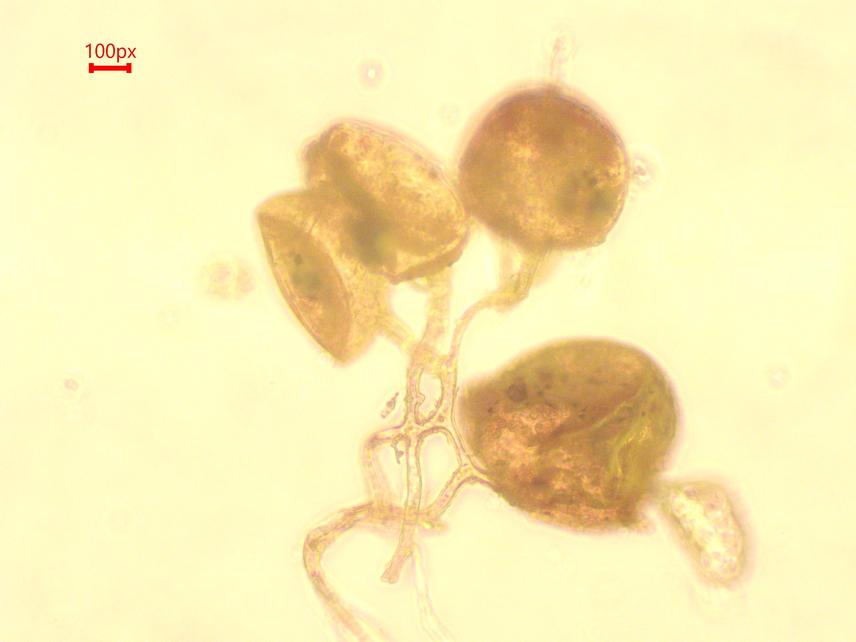
Rhizophagus aff. irregularis_sampled in the commune of Ouèssè in central Benin_Toui-Kilibo forest reserve © Tchan Issifou Kassim
This project resulted in several major findings: (1) An exhaustive inventory of human activities responsible for the degradation of natural AMF habitats, carried out through ethnoecological surveys and direct observations; (2) A comparative study of AMF diversity according to land use, revealing the isolation of 31,934 spores distributed among 24 species and 8 different genera, with higher diversity in natural forests and fallow land at the expense of the main agricultural practices in the area; (3) Identification of five rare AMF strains: Septoglomus sp1, Rhizophagus aff. intraradices, Acaulospora aff. mellea, Glomus aff. fecundisporum and Rhizophagus aff. irregularis.
This research also highlighted the alarming loss of AMF diversity in degraded or cultivated areas, underscoring the urgency of a sustainable conservation strategy.
This project aims to address this need by implementing an active, community-based conservation program centered around (1) trap culture to conserve viable soil strains, (2) the multiplication of isolated rare strains, (3) the establishment of demonstration plots showcasing good agricultural practices, (4) the restoration of degraded habitats through the planting of local trees previously inoculated with AMF, and (5) a new awareness campaign adapted to riparian communities, incorporating previous scientific findings.