Joel Arnaud Masoava

The “Ranobe Bay MPA” is a marine protected located on Southwestern coast of Madagascar, home to valuable marine ecosystems, including coral reefs, mangroves, and seagrass beds. Covering on 42,404 hectares, this MPA extends over two bays: Toliara Bay (home to the Great reef of Toliara, Madagascar's largest fringing reef and one of the most important in Western Indian Ocean, stretching 18 km in length) and Ranobe Bay. Various activities such as pollution, use of destructive fishing gear and practices (beach seine, bottom seine), the removal of coral blocks to search an octopus, molluscs, and overfishing have led to threat this natural heritage area. Or, fishing is the main activity for villagers. The Vezo community was traditionally made up of fishermen and is the largest ethnic group. Recently, several ethnic groups of farmers and herders (such as Mahafaly, Antandroy, Tanalana, and Masikoro) have turned to fishing due to severe drought in the region.
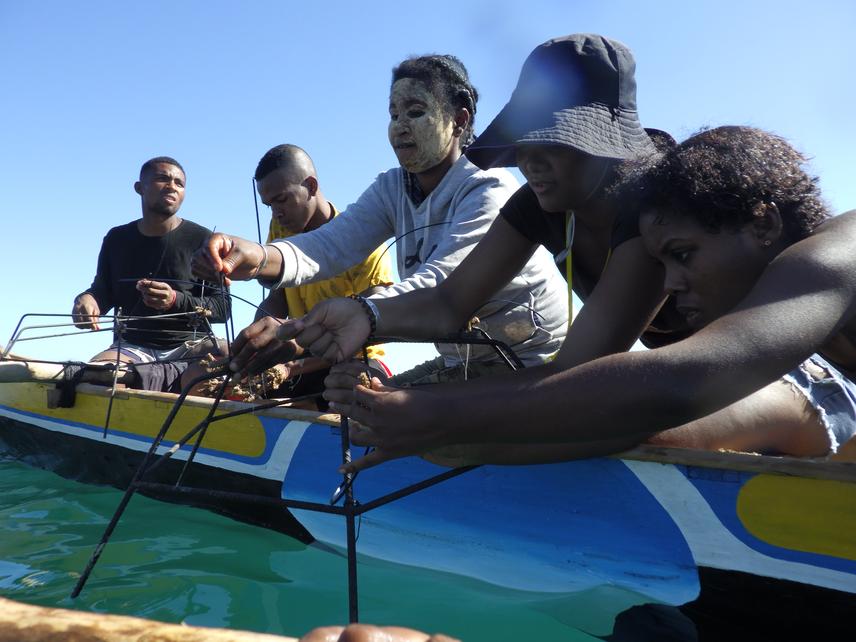
Local communities and scientific students volunteers involved in coral restoration and conservation_Toliara Eco Restoration © MASOAVA Joel Arnaud
Our project aims to strengthen the management of the Ranobe Bay MPA by involving local communities in Amboaboaky and Andrevo in reef ecosystem conservation, restoration, and management.
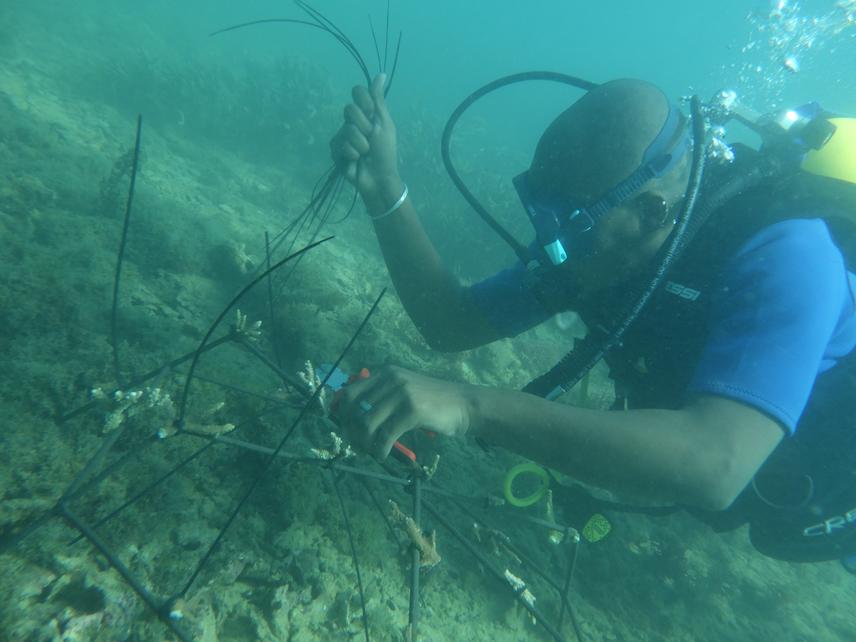
Coral farming survey © MASOAVA Joel Arnaud
In fact, coral transplantation can take place either at the beach (at a depth of 1 m during low tide, so as not to kill the coral cuttings) or at sea from a canoe at the site. This means that everyone can participate, even people with reduced mobility. For transplantation, we use the corals that have naturally detached from their colonies (due to waves or water currents), or cuttings from previously transplanted corals (nurseries) are used. The maintenance, monitoring of mortality, and bleaching of transplanted cuttings will be carried out with permanent representatives from local communities and expert teams from our organization.
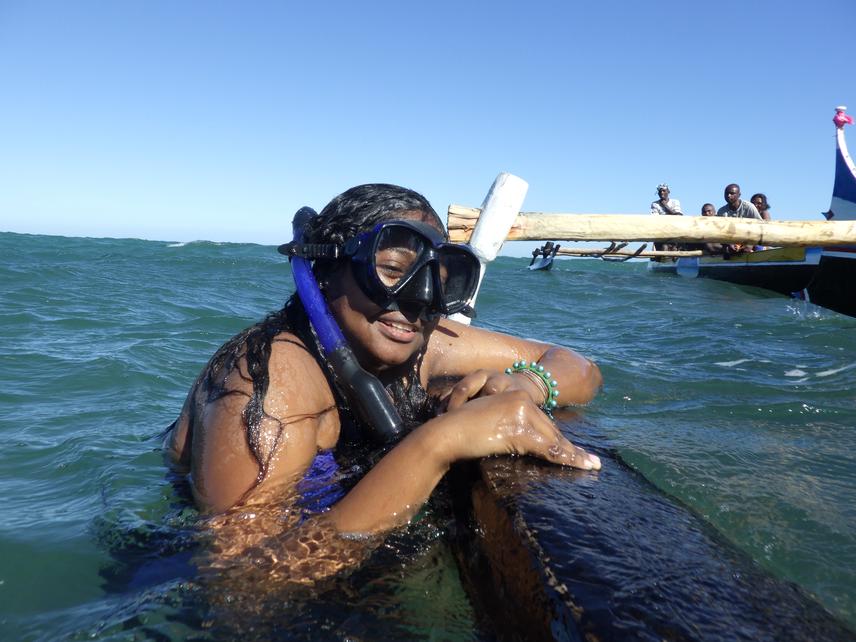
Volunteers involved for coral restoration and conservation © MASOAVA Joel Arnaud
The outcome of this project strengthens the connection between the local marine protected area and its inhabitants, promoting a lasting commitment to conservation. The involvement of local communities strengthens the connection between marine protected area and its inhabitants, promoting a sustainable commitment to conservation.