Eskinder Belay Tefera


This project aims to conduct the first conservation-oriented mapping and threat assessment of the Critically Endangered White-backed Vulture (Gyps africanus) in the Agnuak Zone of Ethiopia’s Gambella Region an understudied area where traditional Agnuak agro-pastoralist hunting practices provide consistent, non-poisoned carrion, potentially supporting viable vulture populations. Despite catastrophic declines of this species across Africa due to poisoning, habitat loss, and veterinary drug contamination, Gambella may represent a rare refuge where human-vulture mutualism persists: hunters rely on vultures’ aerial cues to locate wounded game, while vultures gain access to safe, uncontaminated food sources.
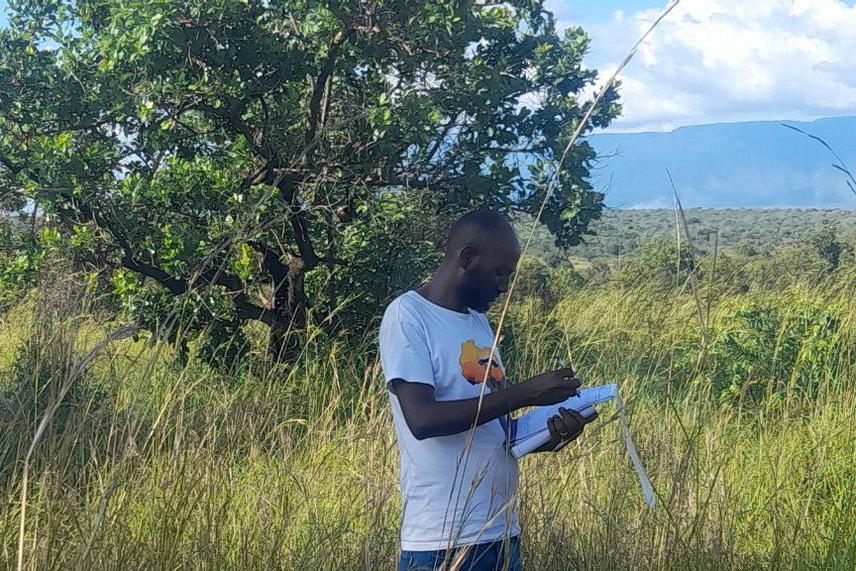
Eskinder Belay Tefera conducting a preliminary field survey in Agnuak Zone, Gambella Region, southwestern to identify vulture habitats © Eskinder Belay Tefera
Using an integrated approach combining ecological field surveys, drone-based roost monitoring, remote sensing (Landsat imagery), and community-based interviews, the project will establish baseline data on vulture distribution, abundance, and key habitats; map land-use changes and threat hotspots; and document local ecological knowledge and cultural attitudes toward vultures. These findings will inform the co-development of a community-based Vulture Conservation Action Plan with local stakeholders, including kebele administrations, hunters, elders, women, and youth, as well as the Gambella Regional Wildlife Department.
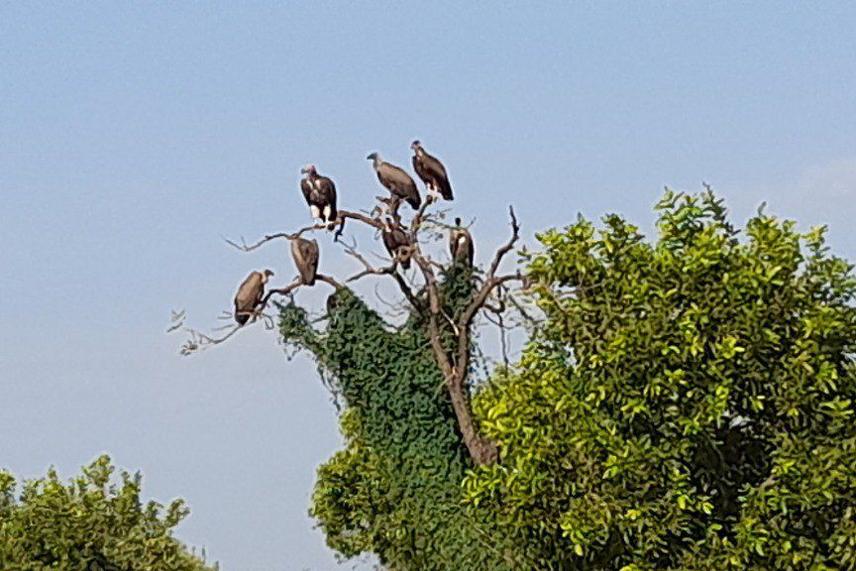
Critically Endangered White-backed Vulture with other vultures recorded during preliminary surveys in Agnuak Zone. © Eskinder Belay Tefera
The project’s main aims are:
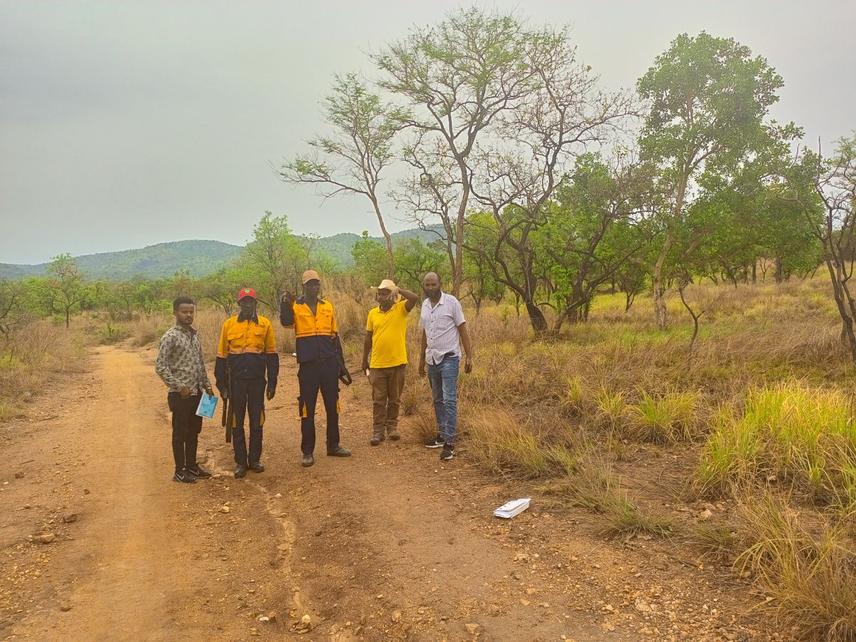
Research team with local scouts during preliminary fieldwork in Agnuak Zone, discussing land use and vulture movement corridors. © Eskinder Belay Tefera
(1) to produce the first spatially explicit distribution and habitat suitability model for White-backed Vultures in Agnuak;
(2) to identify and prioritize at least three high-value, low-threat sites for formal conservation recognition;
(3) to assess community perceptions and document culturally embedded practices that support vulture survival; and
(4) to establish a locally endorsed conservation framework including poison-free pledges and a community monitoring committee that can be scaled into a Vulture Safe Zone.
By anchoring conservation in both scientific evidence and indigenous knowledge, the project seeks to protect a potential ecological corridor within the transboundary Sudd-Gambella landscape, contributing to national and international efforts under the CMS Vulture Multi-species Action Plan.
Outcomes will feed into Ethiopia’s National Vulture Conservation Strategy and support long-term, community-led stewardship of one of Africa’s most imperilled scavenger species.