Eka Maya Kurniasih


Kampung Laut Village in Tanjung Jabung Timur, Jambi, is located within an estuarine coastal ecosystem at the mouth of the Batanghari River, where small-scale shrimp fisheries coexist with ecologically important wetlands and mangrove habitats. These coastal environments provide critical habitat for horseshoe crabs, locally known as belangkas, which play important ecological roles as benthic predators, nutrient recyclers, and prey for other wildlife.
The area is also an important port and coal shipping route, where increasing maritime activities and coastal development may contribute to habitat degradation and biodiversity loss. Despite their ecological significance, horseshoe crabs are frequently captured as bycatch in trammel nets and other fishing gear used by local fishers.
In addition, limited information is available regarding their abundance, distribution, genetic diversity, and potential exposure to local trade, creating significant challenges for evidence-based conservation and management.
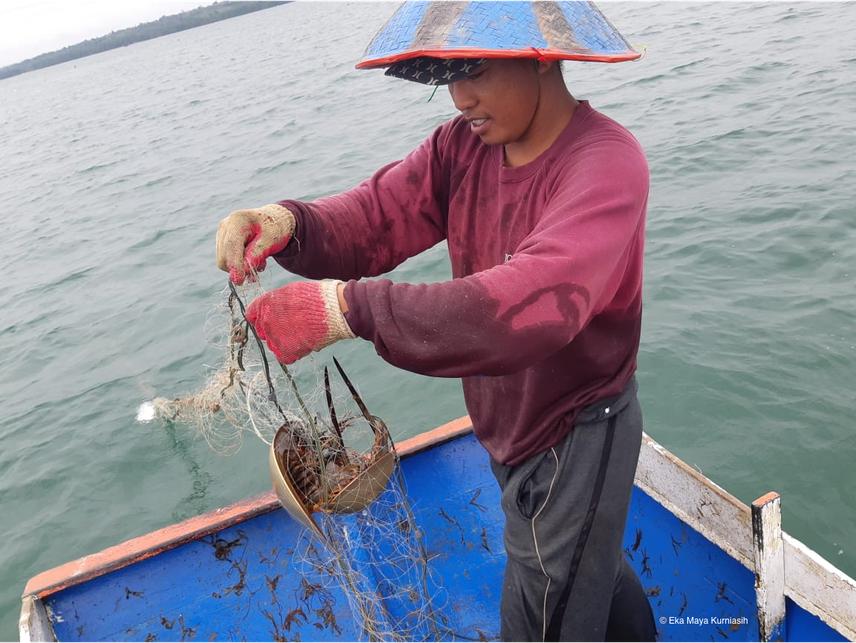
Fisherman
This project aims to generate baseline ecological, genetic, and increased awareness of Horseshoe Crab conservation issues on horseshoe crab populations in Jambi, focusing on Tachypleus gigas and Carcinoscorpius rotundicauda, while documenting any occurrence of Tachypleus tridentatus if encountered.
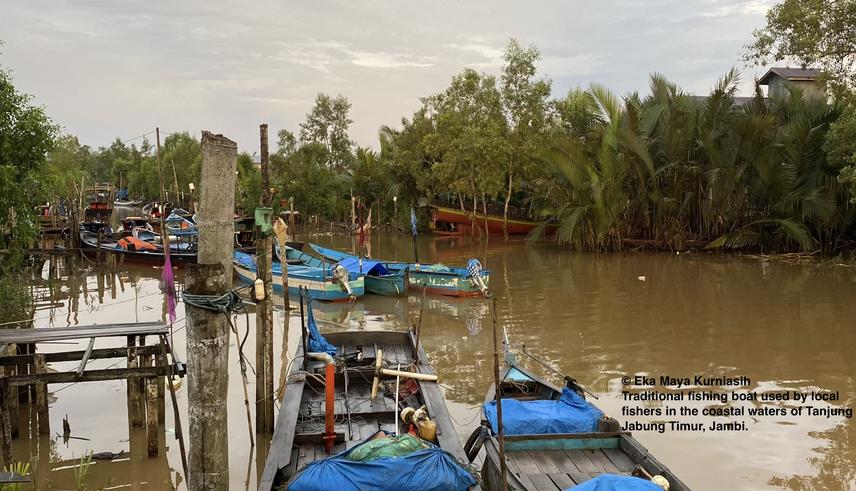
Traditional fishing boat used by local fishers (c) Eka Maya Kurniasih
Specifically, the project will assess the occurrence and scale of horseshoe crab bycatch in local shrimp fisheries, identify key drivers contributing to bycatch, and evaluate potential links to local trade. The project will also collect baseline information on abundance, distribution, population structure, and genetic diversity to strengthen the scientific foundation for future conservation planning. In parallel, we will examine community perceptions of horseshoe crabs, including attitudes toward bycatch reduction and the adoption of more selective fishing practices.
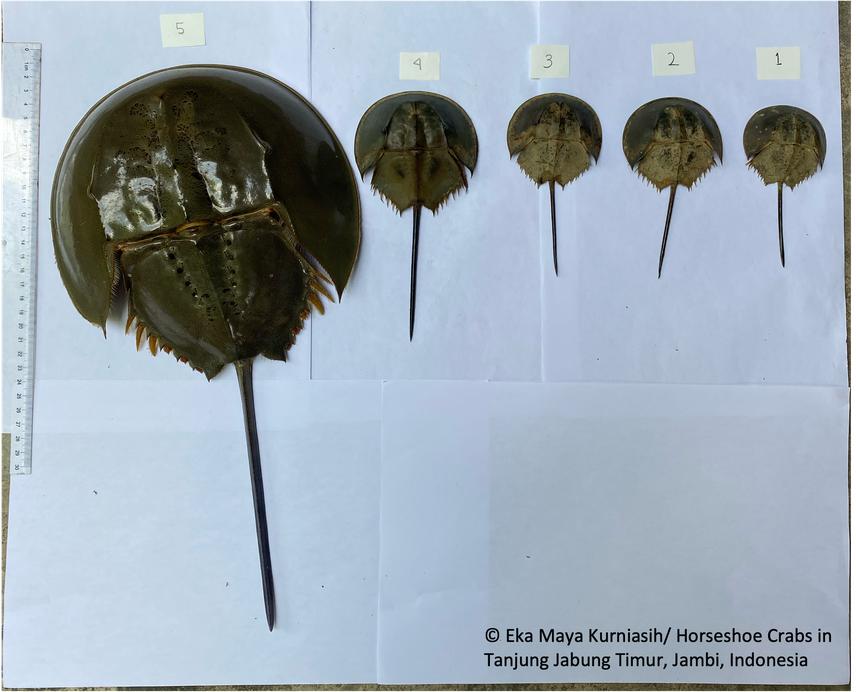
Horseshoe crabs (c) Eka Maya Kurniasih
The project combines field surveys, interviews, citizen-science monitoring, and genetic analyses to assess horseshoe crab populations, genetic diversity, and bycatch. Fishers and local stakeholders will participate in species identification, habitat monitoring, and the development of practical bycatch mitigation measures.
The project will also strengthen local capacity through awareness campaigns, citizen-science activities, and training programs involving fishers, community members, university students, and government stakeholders. Training on genetic approaches will be provided primarily to university students, focusing on non-invasive sample collection and basic molecular analysis techniques. Expected outcomes include the first comprehensive baseline dataset on horseshoe crabs in Jambi, increased awareness of conservation issues, improved understanding of bycatch dynamics, and practical recommendations for reducing bycatch in local fisheries.
The findings will be synthesized into policy recommendations and outreach materials to support long-term conservation planning and the protection of horseshoe crab populations and their coastal habitats in Jambi.