Martin ETONE

Tackling the Bushmeat Crisis through Wildlife Conservation Education

LocationCountryCategoriesDate
Bangem, Kupe Muanenguba Division, SW ProvinceCameroonAfrica, Bushmeat, Forests, Primates22 Jan 2008

The Central Africa forest region inhabits over 30 million people. Most of these people rely on bushmeat as an economically important food and income item for their rural and urban families. Statistics show that 1.1 metric tons of bushmeat is eaten in this region annually. The reason for this alarming figure is that as agriculture becomes increasingly unprofitable due to low cash crop prizes and the devaluation of the local currency, many rural people in the Congo Basin have resorted to unsustainable hunting and trading of bushmeat. This activity today, exposes rare and endangered species such as the elephant, chimpanzees, gorilla and bullfalo to extinction. Illegal uncontrolled hunting is therefore causing a major threat to the future of wildlife in this sub-region.

In the Bakossi and Muanenguba forest regions of Cameroon, endangered species of wildlife, particularly primates such as Chimpanzee(Pan troglodytes) Drills(Mandrillus leucophaeus), Preuss’s monkey (Cercopithecus preussi) Putty nose nose guenon(C. nictitans) are under great pressure and threatened with extinction due illegal unsustainable, non-selective hunting methods and practices and the rising bushmeat trade in the region.

Therefore this participatory project aims at raising communities’ awareness on the impact of such unsuitable practices on people and wild animals, particularly endangered species. CAD attempts to achieve this through community-based sensitisation campaigns against poor hunting methods, explanation of wildlife policies and regulations to local communities and improving grass root participation in the reinforcement and implementation of such policies on the ground.

Furthermore, the project addresses issues of poverty by introducing and promoting viable alternative activities to hunting such as beekeeping, snail farming and livestock production, thus, promoting the conservation of biodiversity through non-consumptive use to alleviate poverty among forest dwellers. These activities are intended to meet with the food and income requirements of local populations and reduce the time put set aside for illegal hunting and sale of bushmeat. Our long term goal therefore is to:

1)Endear the concept of conservation practice to indigenous and peripheral forest dwelling populations;

2)Soothe their eventual loss of land and access to other natural resources when many more protected areas are created out of the zone to meet the national target under protection;

3)Improve local incomes without endangering the lives of wildlife in the Bakossi and Muanenguba forest regions.

For more information contact cad_action@yahoo.com or etonem@yahoo.com

Project Report

Read about the progress to date in the report below.

File DownloadSize
REPORT_Feb_08.doc78 KB
Brief Report Second Phase of Sensitisation Meetings against Illegal Hunting and Bushmeat Trade—10-17 March 2008

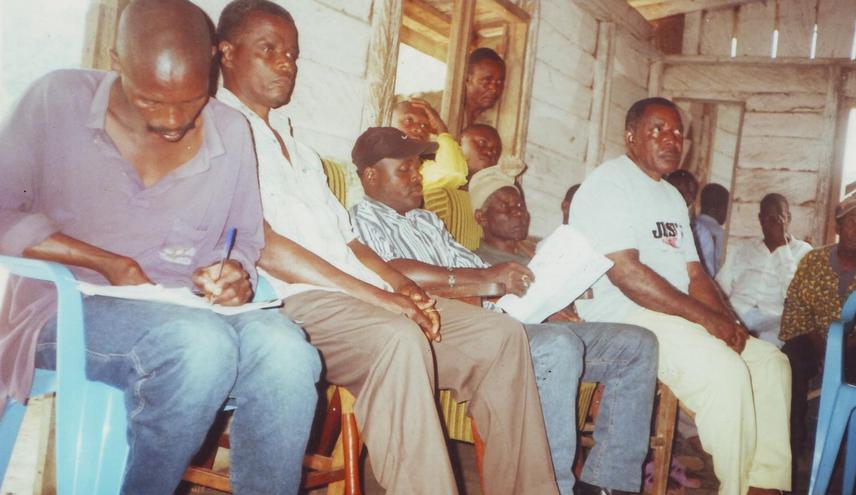
CAD recently concluded an additional series of three community-based sensitisation meetings in Muabi, Enyandong and Babubock communities as our conservation education strategy to enhance sustainable wildlife management in the Bakossi and Muanenguba forest regions of Cameroon. Funded by the Rufford Small Grants Foundation, these meetings aimed at raising community awareness against poaching, poor hunting practices and bushmeat trade with particular focus on the conservation of endangered species such as chimpanzees, drills which are under legal protection and included under IUCN Red List. Over 104 local hunters and bushmeat traders, community chiefs, councilors, bushmeat consumers from 19 newly identified villages have been fully sensitized against illegal hunting activities in the project area. Since project inception, 220 people (from 19 villages) with interest in hunting and bushmeat issues have been identified and fully sensitized.

During brainstorming sessions of each meeting, local people enumerated various hunting practices and methods used, most of which were non-selective, wasteful and totally prohibited by the Cameroon’s wildlife law. While local populations appreciate wild animal resources as an important socio-economic and cultural asset (they are a source of food, income, medicine, cultural value and source of pride and strength) they were equally assisted to recognize the negative impact of these unscrupulous practices on wildlife and people. The meetings provided an opportunity for local communities to understand their user rights over bushmeat as well as the legal implication in killing and trading in endangered and protected species currently under severe stress.

Furthermore, a preliminary explanation of some aspects of the wildlife law was done and, participants collectively defined grassroots’ strategies for controlling and monitoring undesired hunting practices. A total of three Follow-up Committees have been formed to work towards the creation of additional wildlife management groups in the project area. It is worth noting that local communities have been very receptive and eager to learn about the law, but expressed dissatisfaction about the aspects of double punishment and the complete prohibition of the sale of bushmeat on which they rely for survival. It should be noted that this exercise is an integral component CAD’s ongoing campaigns for the protection of endangered wildlife species in the Bakossi and Muanenguba forest regions of Cameroon.

Wildlife Law Leaflet

Martin Etone produced the leaflet below as part of the project.

File DownloadSize
Leaflet on the Wildlife Law.doc1.06 MB
Workshop Report

Read the report 'SENSITIZATION WORKSHOP ON THE 1994 WILDLIFE LAW ORGANISED CAD/RSG IN COLLABORATION WITH MINFOF IN TOMBEL, FROM THE 25-26 APRIL 2008'.

File DownloadSize
REPORT ON THE SENSITIZATION WORKSHOP ON THE 1994 WILDLIFE LAW ORGANISED CAD.doc106.5 KB
Snail Workshop:

Practicals on Snail Cage Contruction

Read the report from the snail workshop.

File DownloadSize
TRAINING OF TRAINERS WORKSHOP ON SNAIL FARMING.doc55.5 KB
Interim Report: September 2008

Read the report 'ALTERNATIVE MICRO-ENTERPRISES TO ILLEGAL HUNTING' written by Martin.

File DownloadSize
ALTERNATIVE MICRO-ENTERPRISES TO ILLEGAL HUNTING.doc38.5 KB

Other Projects in: