Carlos A. Mancina

Effects of Hurricanes on Bat Populations in the “Sierra del Rosario” Biosphere Reserve, Cuba: A Long-Term Monitoring Study

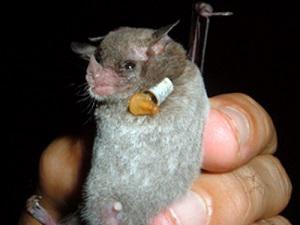
A Greater Antillean Long-tongued bat (Monophyllus redmani) recaptured five years after being marked (Photo: Carlos Mancina).

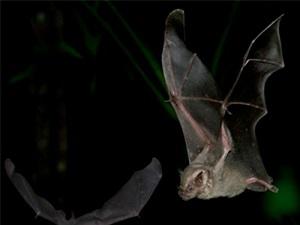
The Jamaican Fruit-eating bat (Artibeus jamaicensis) and the Sooty Mustached bat (Pteronotus quadridens) are two common bat species at the Reserve (Photo: Raimundo López and Carlos A. Mancina).

Proposal of educational poster.

Town/RegionCountryCategoriesDate
Sierra del Rosario Biosphere Reserve CubaBats, Central and Latin America, Habitat19 Jun 2009

In Cuba, and other Antillean islands, the destruction of natural habitats by human and natural causes could put many bat species at extinction risk. These mammals may be particularly vulnerable to stochastic natural events such as hurricanes.

In September 2008 the “Sierra del Rosario” Biosphere Reserve was affected by hurricanes Gustav and Ike, causing huge affectation to the vegetation. Although several aspects of the biology of Cuban bats are known, their habitat requirements and long-term changes of the populations remain unexplored. Since middle 90’ we began long-term monitoring of bat populations in the “Sierra del Rosario” Biosphere Reserve. Based on mist netting inventories and the acoustic monitoring of several vegetation patches, we have obtained information on the annual and seasonal fluctuations of the abundance of the most common species. We have also collected information on bat assemblage composition and use of habitat, among other things. This information represents an important data set to explore long-term response of bat populations to hurricanes in one of Cuba’s most conserved forest ecosystems of Cuba.

The aim of this project is study the effect of these hurricanes on the bat populations of the reserve. We will sample and compare abundance and other biological parameters of bat species in three sites affected by hurricanes. Knowing the effect on bat species to changes in their habitat is very important to design conservation strategies of these species and their habitat (e.g. foraging habitats and caves). This study would be useful to understanding and predicting the effect of hurricanes on the response of other Cuban terrestrial vertebrates with similar ecological requirements (e.g. birds). Long-term information about habitat use, diet, foraging behavior, reproduction, nocturnal activity, etc. will be an important contribution to the knowledge of these Cuban mammals.
For more information contact mancina@ecologia.cu

Project Update: August 2009

We conducted three expeditions to "Sierra of the Rosario" Biosphere Reserve in May, July and August 2009. In each of these trips, a week of fieldwork was carried out to evaluate hurricane-induced changes in habitat structure and populations of bats. A qualitative and quantitative characterization of the vegetation was performed in sites from which we had data on the vegetation structure before hurricane impact.

In these sites we sampled bat assemblage composition. A total of 207 individuals of 11 species were captured and marked during this period. At the same time, we recorded acoustic emissions in these sites throughout the nights using the ANABAT system to estimate levels of activity of insectivorous species. A harp trap was placed in natural corridors of forest vegetation to capture those insectivorous bats that are seldom captured in the mist nets. With the harp trap, in July, we captured one individual of the Lesser Funnel-eared bat (Chilonatalus micropus macer) which constitutes the first record of the family Natalidae in the Reserve. In May we also presented a training lecture to workers and forest rangers of the Reserve about the bat diversity, and conservation priorities in the area.

Project Update: December 2009

This year we had carried out five visits of one week to Sierra del Rosario Biosphere Reserve from May 2009. To date, in the three monitoring sites (El Taburete, La Serafina and Estación Ecológica SR) using mist nets set at ground level, we had captured and marked 336 individuals of 13 species belonging to five families. In these sites we had registered the echolocation calls using Anabat II detectors and recorded onto a compact flash card with a zero-crossings analysis interface module; so far we had recorded 144 hours of nocturnal activity of insectivorous bats.

All this information will be compared with previous data to explore the effect of the hurricanes on the bat assemblages inhabiting this reserve. To complement the species inventory and distribution of the bats of the Reserve, we had carried out captures with mist nets, harp trap and under the bridges in several localities of this protected area; we will make a map using GIS with all sampled sites at the end of the project. During this period we had took photos to be used in educational talks as well as to make a poster of the bats of the Sierra del Rosario Biosphere Reserve; many of these images will also be used in the book of the mammals of Cuba (Mamíferos de Cuba) that should be printed next year.

Final Report

Read about the activities undertaken and findings of this project in the final report below.

File DownloadSize
Final Report693.5 KB
Detailed Final Report943 KB
2nd RSG Grant Awarded

Congratulations to Carlos for his second RSG, to read about this project http://www.ruffordsmallgrants.org/rsg/projects/carlos_mancina_0


Other Projects in: